
Reef Discovery: Ocean Homes
Compare coral, seagrass and sand through Troy Mayne’s real underwater photographs. Look closely, ask questions and create your own reef adventure.
Compare three ocean homes
Coral reef
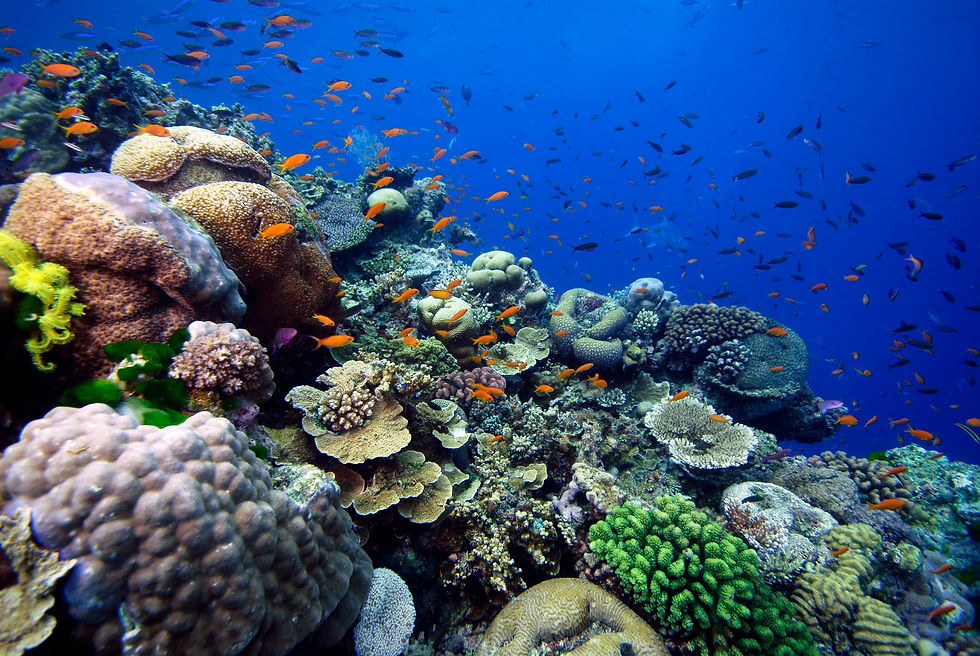
Look at the many shapes in this reef photograph. Find branches, rounded shapes and spaces between them.
Question: Where could a small fish fit?
Seagrass meadow

Look at the fish above the long seagrass leaves. Compare the leaf shapes with the coral shapes.
Question: What is similar and what is different?
Sandy seabed

Look carefully across the sand. Describe the textures and any animals or other details you can see.
Question: What might be outside the frame or hidden from view?
Notice, wonder, imagine
Name three things you can actually see. Ask one question you cannot answer from the photograph alone. Then invent a reef adventure, making clear which details are observed and which are imagined.
For educators
Holes and overhangs in coral reefs provide shelters used by many fish.[1] Seagrass meadows provide habitat for marine animals; their benefits vary between plants and places.[2] These studies offer background knowledge, rather than identifying the animals or locations in these photographs.
Download classroom photo activities · Back to Reef School
Sources
1. Alexandre Ménard et al., “Shelters and Their Use by Fishes on Fringing Coral Reefs,” PLOS ONE 7, no. 6 (2012): e38450. Read the open-access article.
2. Lina Mtwana Nordlund et al., “Seagrass Ecosystem Services and Their Variability across Genera and Geographical Regions,” PLOS ONE 11, no. 10 (2016): e0163091. Read the open-access article.
Underwater photography © Troy Mayne / Oceanic Imagery.


Mangroves: above and below
Look across the waterline with Troy’s photographs. Trace the roots, compare the shapes and ask how this habitat supports life. Mangrove habitats can shelter young fish and help protect coastlines.
Timor-Leste connection
Communities in Timor-Leste have worked together to restore and care for mangroves. Explore this example in the teacher notes, alongside questions about roots, habitats and coastal care.
Photographs © Troy Mayne
Free PDF · 4 pages · Ages 6–12 · 3.8 MB


People and the sea
Compare a closer and a wider view of a person, canoe and octopus. What can you observe, and what would you need to ask? Explore food, livelihoods and caring for marine habitats. A photograph alone cannot tell us whether a fishery is sustainable.


Photographs © Troy Mayne
Free PDF · 4 pages · Ages 6–12 · 1.2 MB
Exploring the ocean safely
Discover ways to see the ocean through snorkelling, scuba, helmet seawalking, shore visits, boats and photographs. Compare the equipment, ask safety questions and choose a way everyone can enjoy.

Helmet seawalking
Troy's helmet photograph introduces another way to explore underwater. Helmet seawalking is diving and needs operator checks, a briefing and qualified supervision.

Snorkelling together
Staying with a buddy is one part of preparation. Children need active adult supervision; a buddy or flotation vest does not replace it.

Scuba diving
Scuba uses a cylinder and regulator to breathe compressed gas underwater. It requires formal training or a supervised introductory experience with a qualified instructor.
Prefer to stay dry? Explore from a suitable shore viewpoint, a glass-bottom boat, an aquarium, or through books, photographs and video.
Classroom discussion only, not diving instruction. Follow local conditions, eligibility checks and qualified guidance. Give wildlife space and never touch, chase or feed it.
Original photographs supplied by Troy Mayne.
Ages 6–12 classroom activity • 6 pages • PDF • 2.1 MB
One cuttlefish, changing appearance
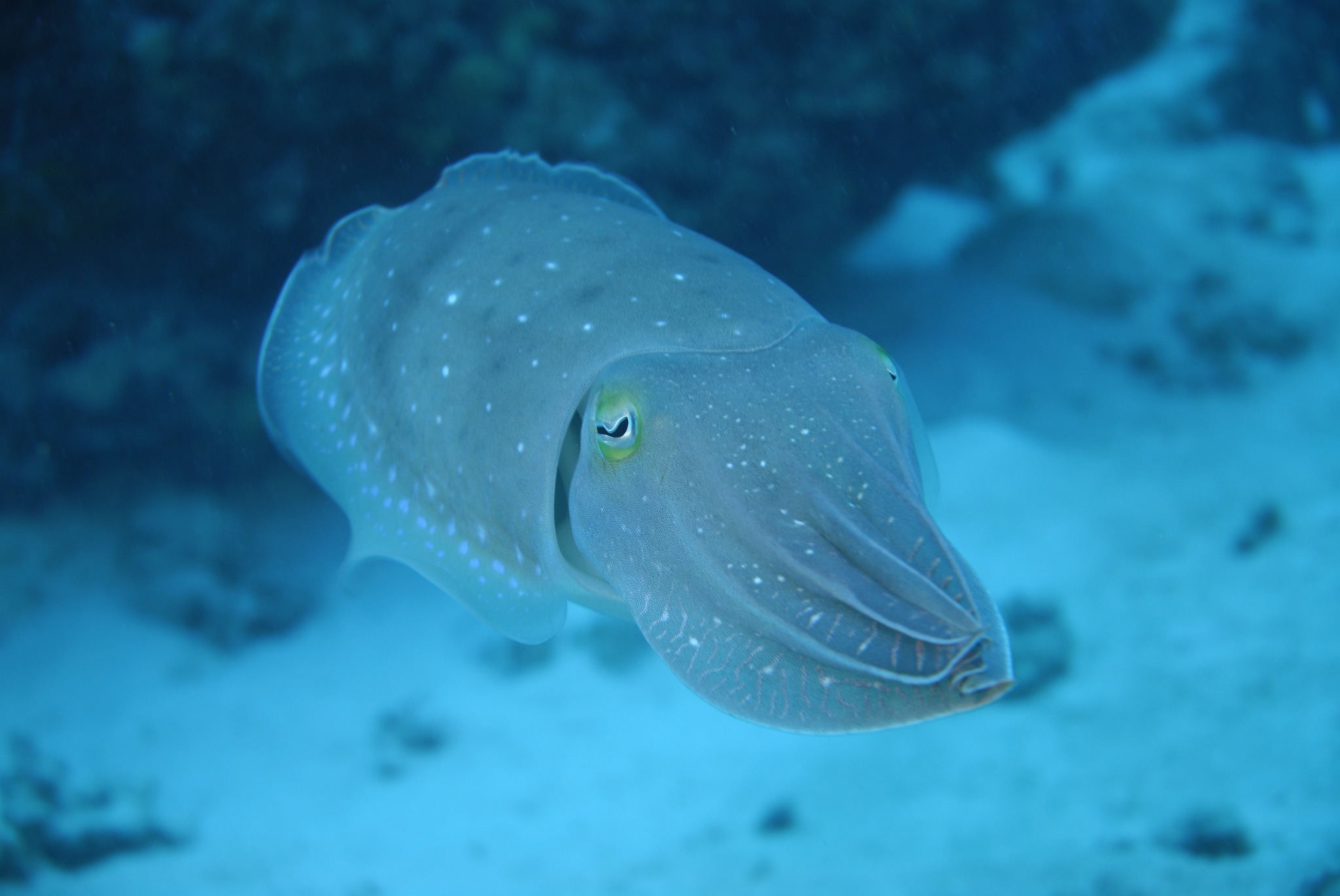
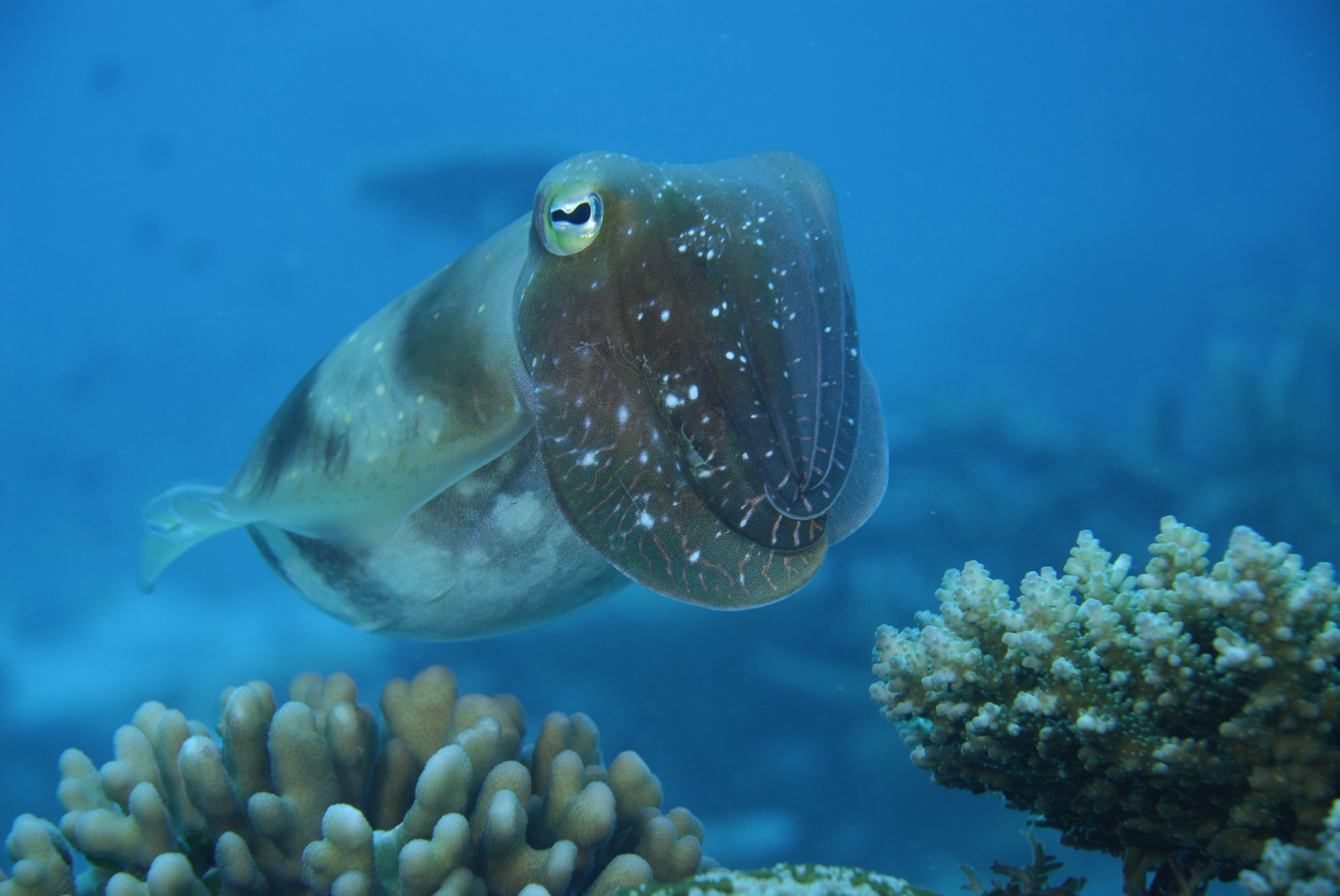
Nine real photographs. One careful investigation. Troy identifies these photographs as the same cuttlefish changing appearance. Follow the sequence and compare pale areas, dark patches and body outline. What looks different? What remains recognisable? A photograph is a starting point for a question, not proof of the animal’s feelings or the cause of every change. Keep viewing angle and lighting in mind.
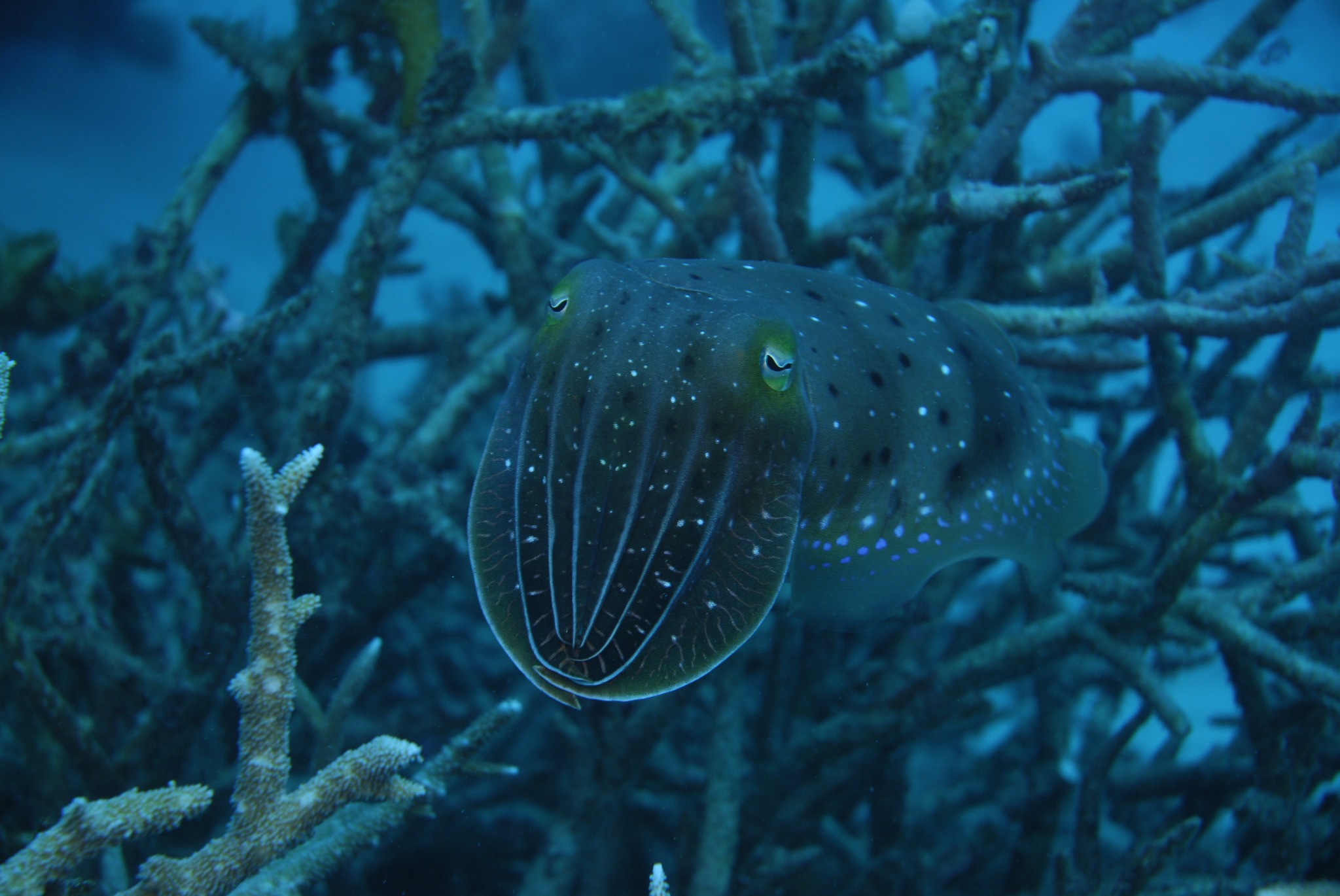
1. A darker body and fine pale markings stand out among the branching coral.
2. The body appears much paler in this view above the sand.
3. Pale and dark patches appear together as the cuttlefish faces towards the camera.
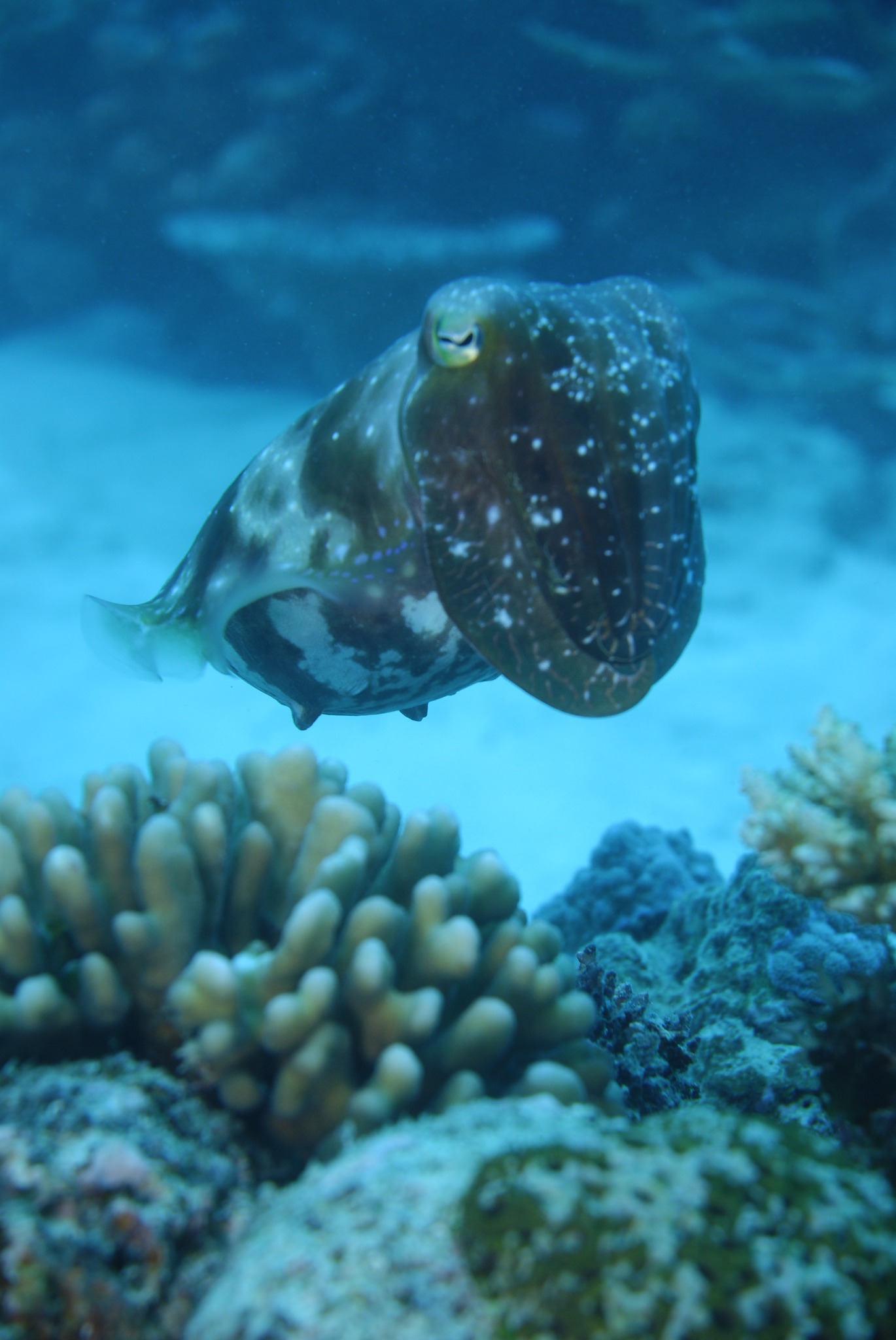
4. This portrait view shows the front of the animal and part of its side.
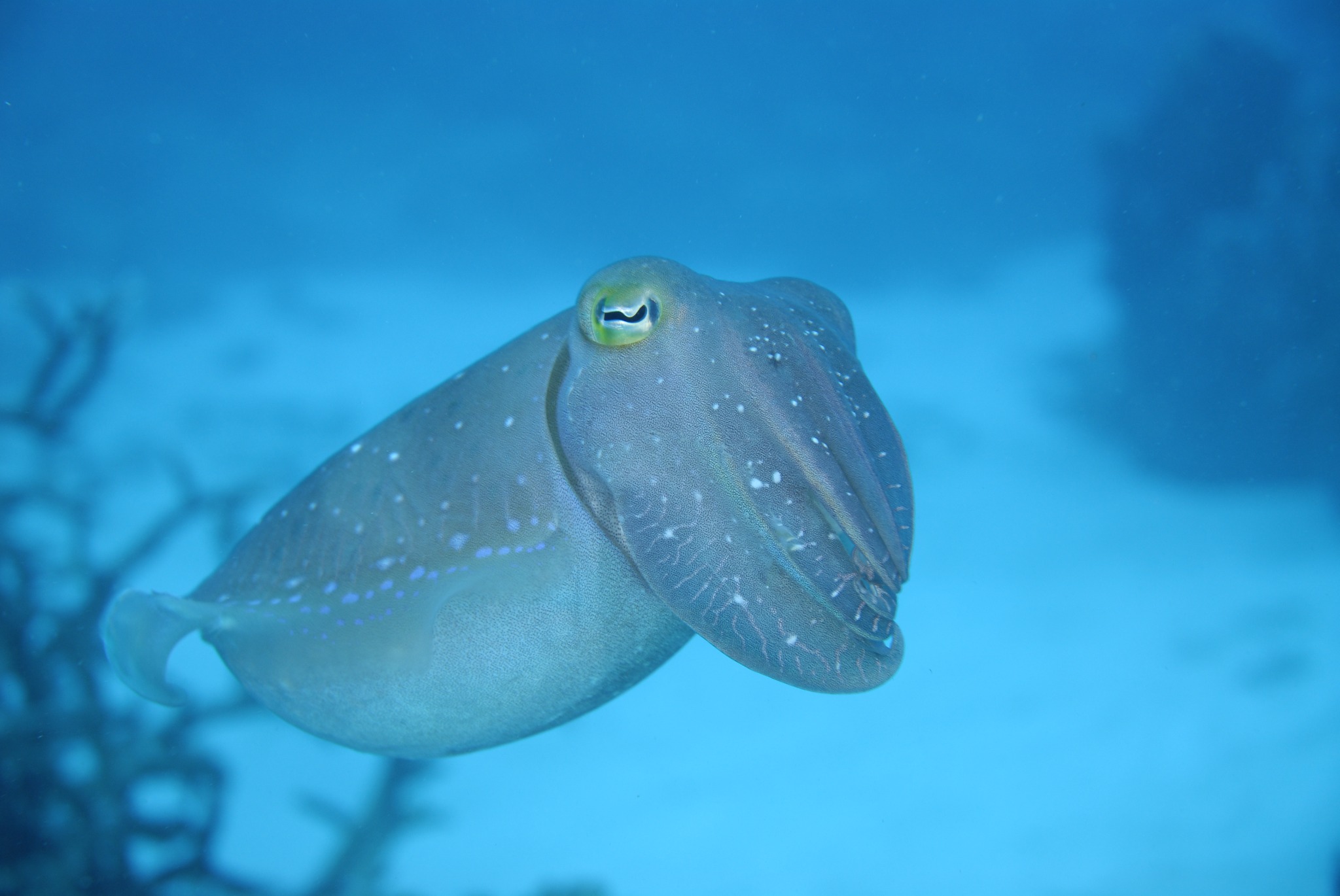
5. A side view makes the eye, body edge and smaller pale markings easier to compare.
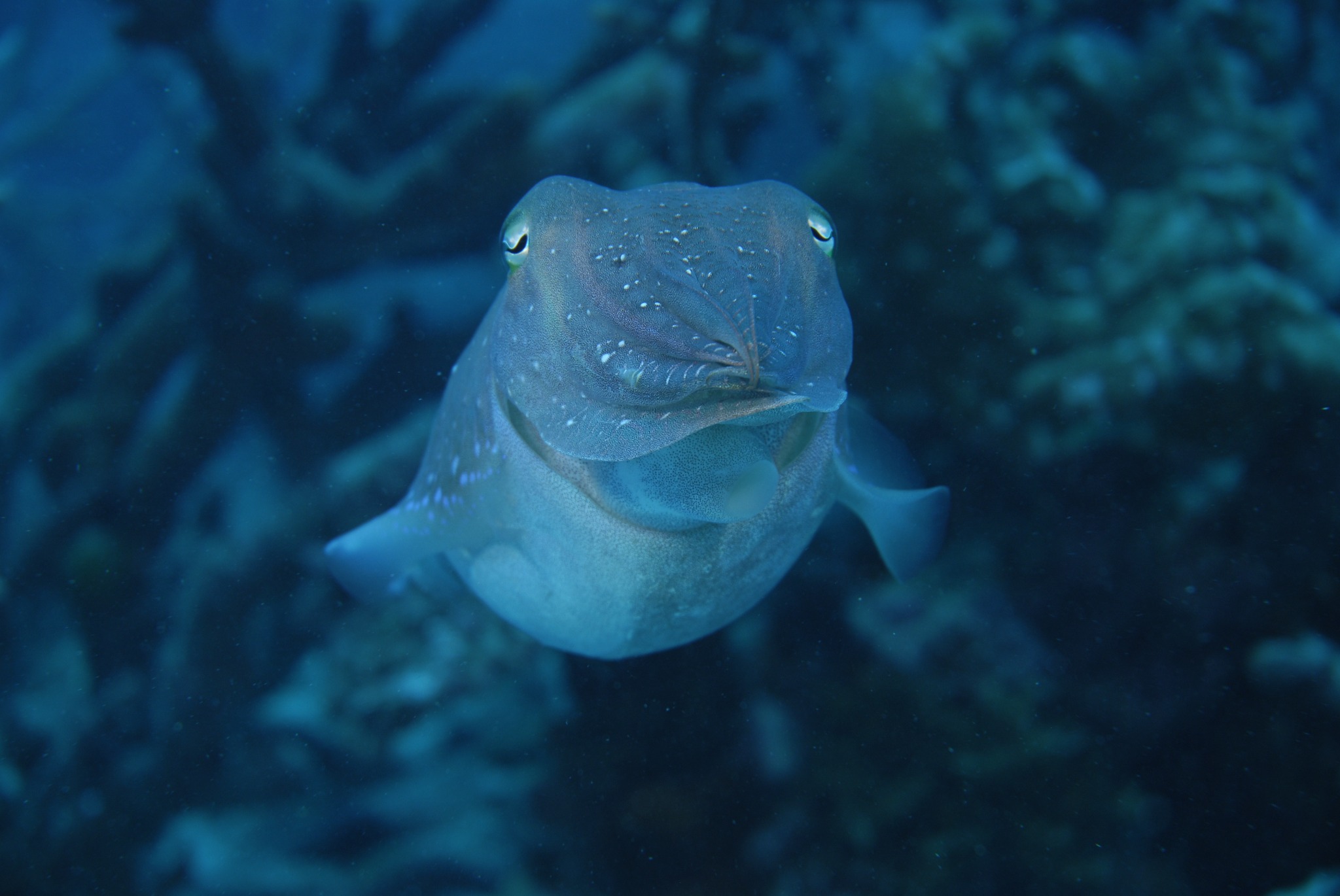
6. In this front view, the pale body contrasts with darker branches behind it.
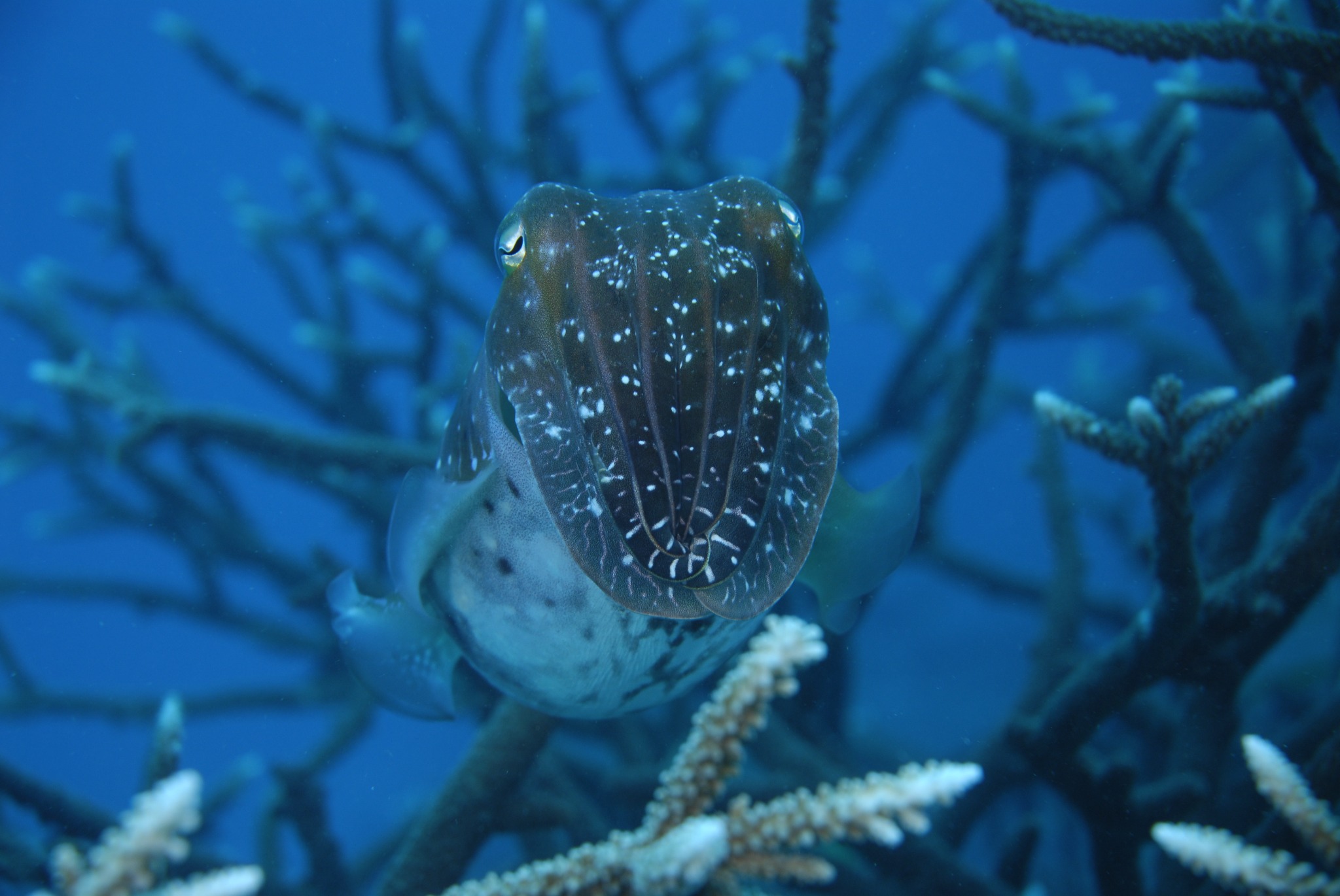
7. The front appears darker again, with many small pale markings.
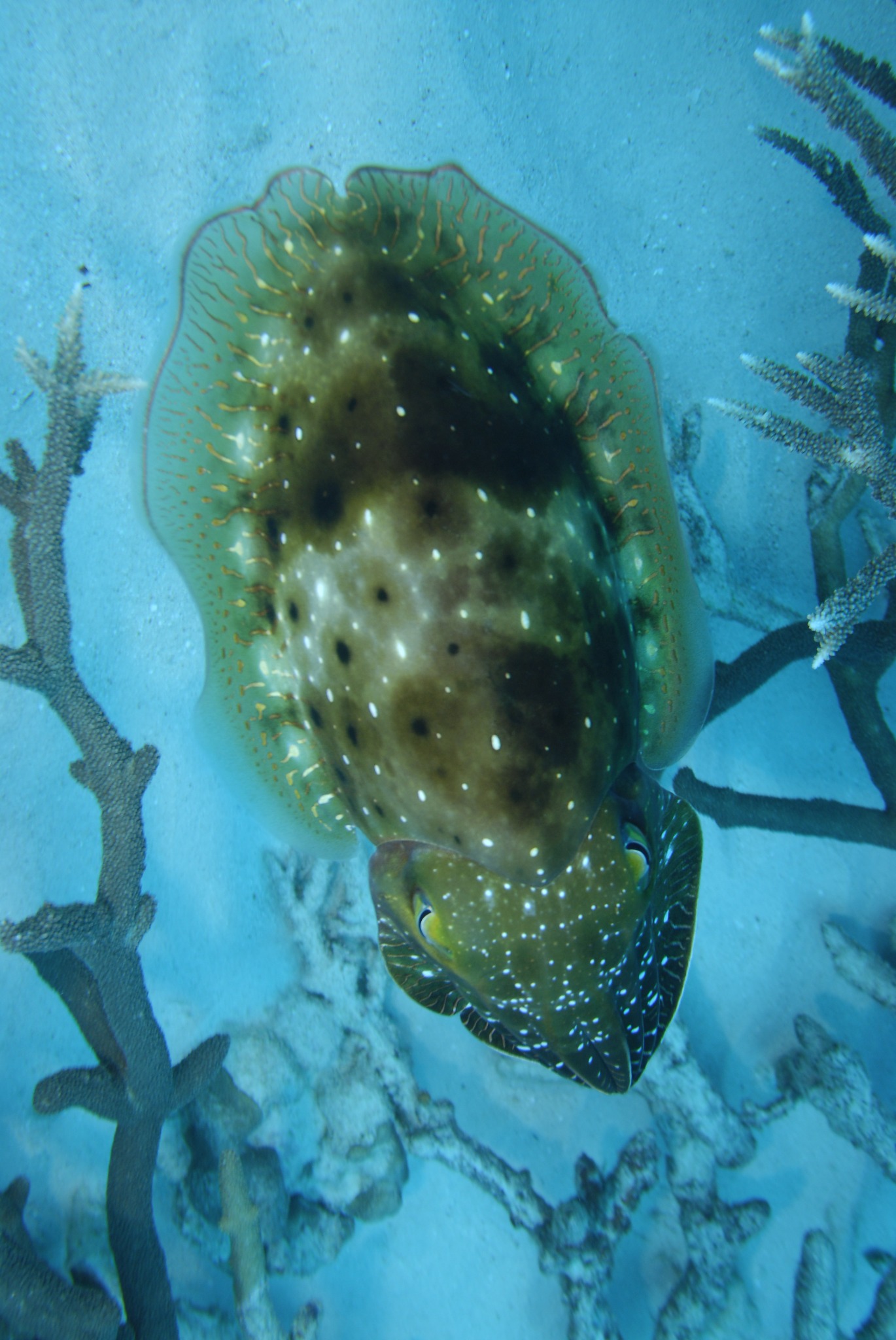
8. An overhead view reveals irregular dark patches across a paler body.
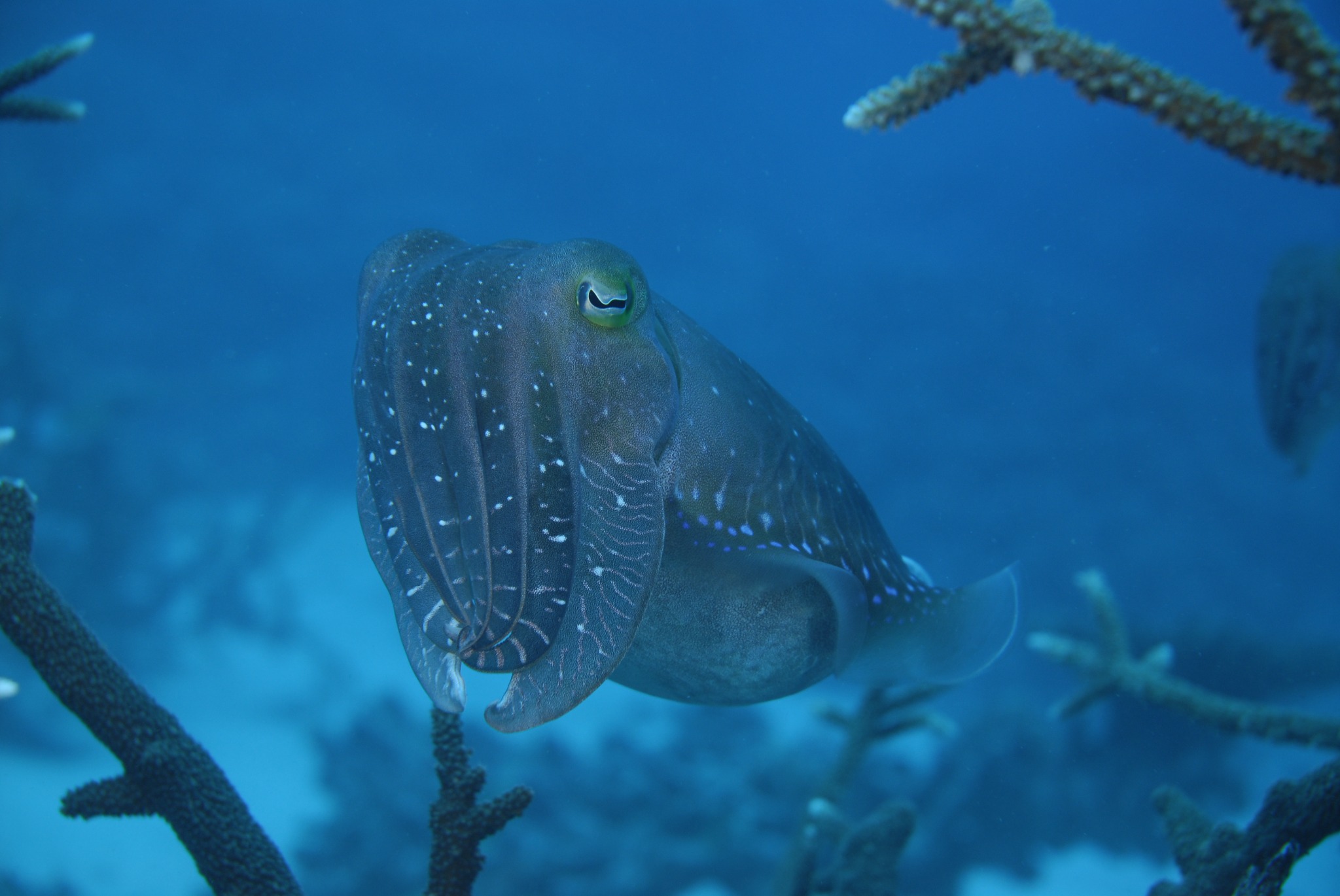
9. The final supplied view shows fine pale markings and a different viewing angle.
Look, compare and question
I notice … Choose two photographs and describe a visible difference. Give their numbers.
I think … because … Offer an explanation, then say what further evidence would help check it.
I wonder … Ask a question that a video or field note could help answer.
Ages 6–12 · 30–40 minutes. Children can speak, point, draw or write their responses. Display the photo pages and print page 6 of the pack for pupils.
Photographs © Troy Mayne.