
People and the sea
Ages 6–12 · 30–40 minutes. Compare two original photographs, separate observations from explanations, and explore how coastal communities care for the sea. Write, draw or discuss your answers.
A closer view
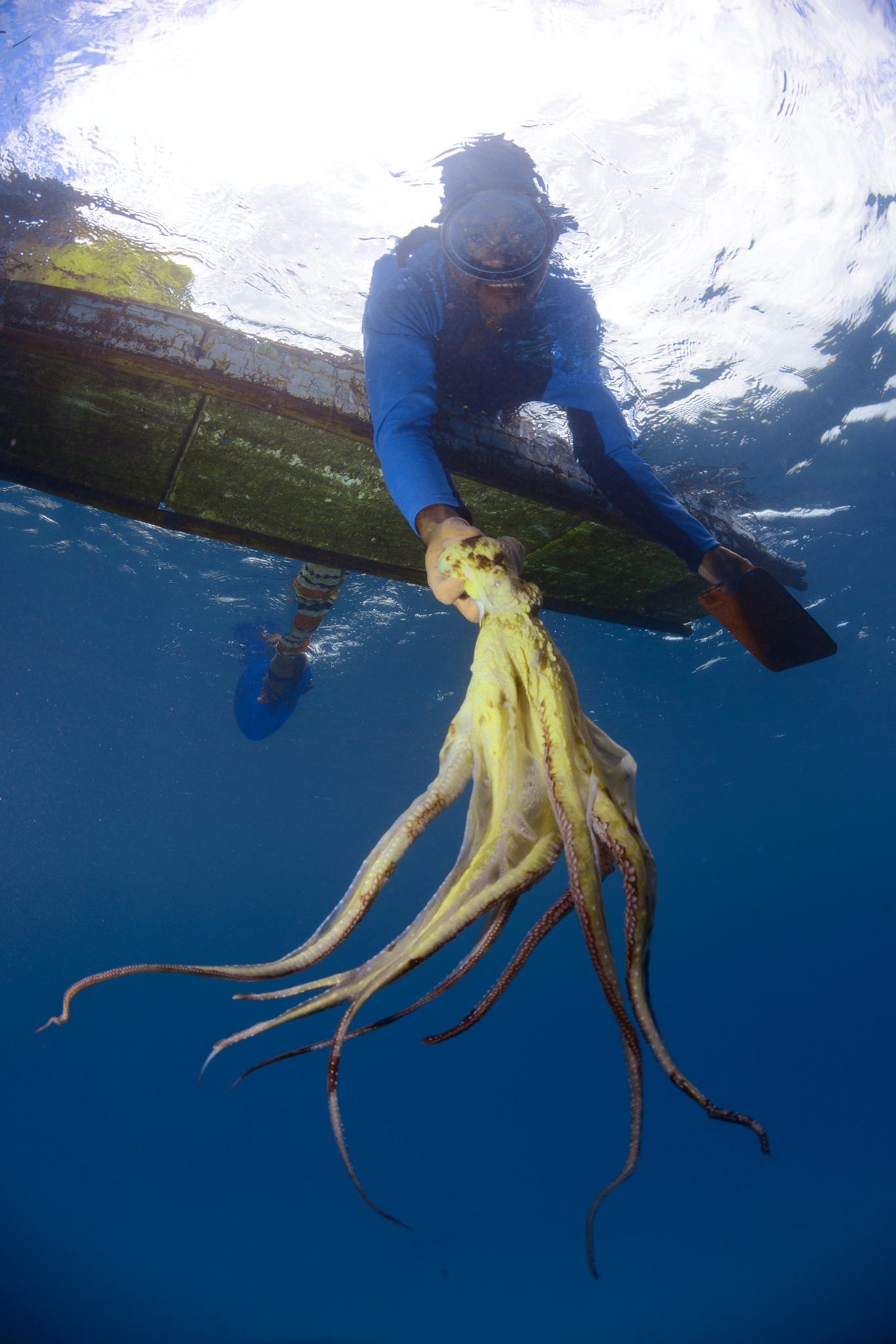
Photograph 1 · Troy Mayne · _TRM0874a.jpg
A person beside a wooden canoe holds an octopus and a paddle. The photograph is taken from below the water’s surface.
Discuss: Which details show a connection between people and the sea?
Ages 6–8: Point to the canoe, the paddle and the octopus. Describe their shapes.
Ages 9–12: List what you can see. What would you need to ask before explaining how or why the octopus was caught?
A wider view
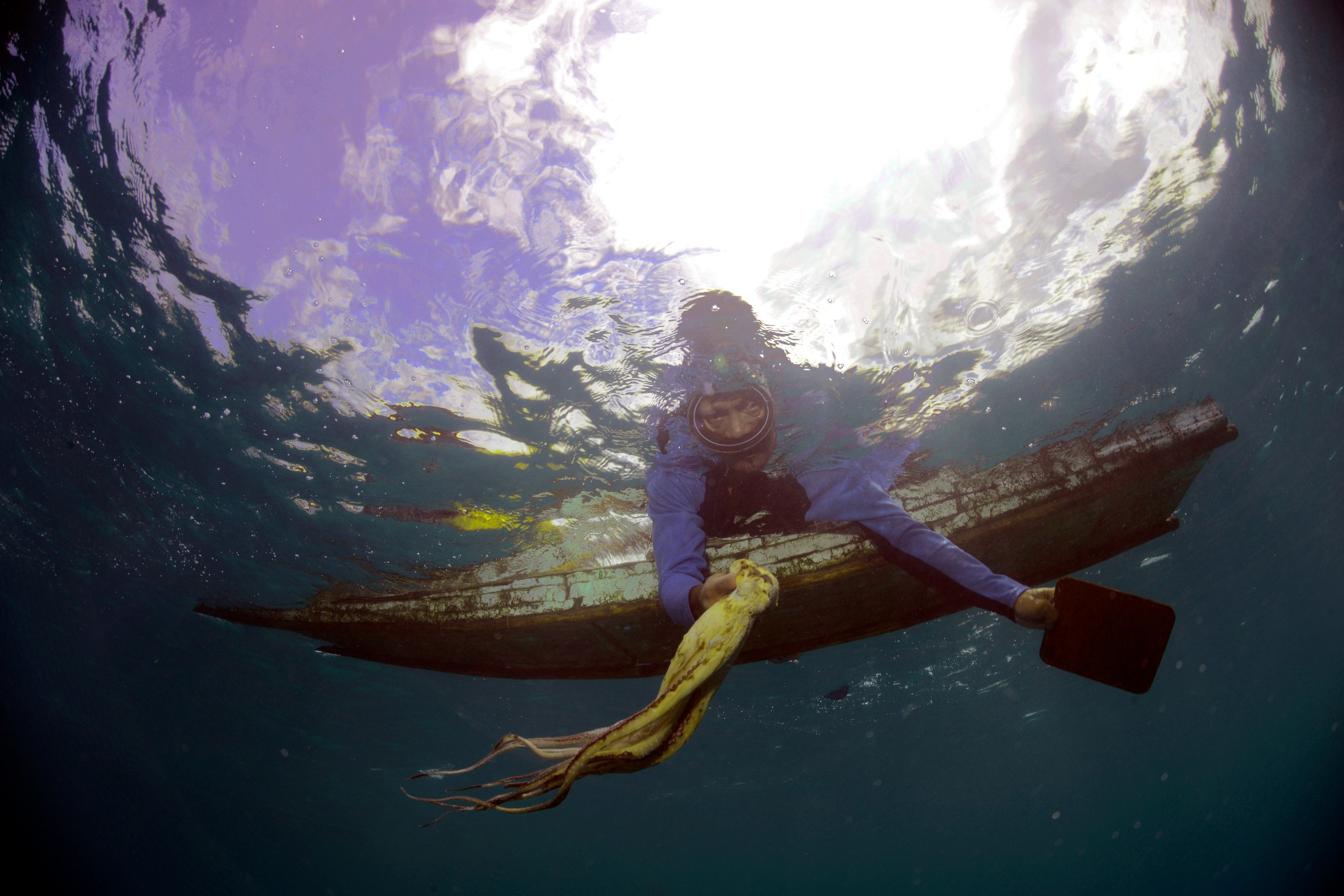
Photograph 2 · Troy Mayne · _TRM0878a.jpg
The wider frame includes more of the canoe and surrounding water. Compare it with the closer view above.
Discuss: What does the wider view add? Which questions are still unanswered?
Ages 6–8: Find two details that appear in both photographs.
Ages 9–12: Can these images alone show whether a fishery is sustainable? Suggest two kinds of evidence you would need.
Pupil worksheet
Write, draw or discuss your answers.
1. Record two observations from the photographs. Then write one question you would ask the person pictured.
2. What might a coastal community need from the sea? What might marine animals need from their habitat? Draw or write an idea for each.
3. Imagine a community discussing how to care for its fishing area. Suggest one shared action, who should help decide it, and what evidence could show whether it works.
Teacher notes
Learning goal: Use photographs to discuss coastal livelihoods, animal habitats and the evidence needed to care for both.
Time: 30–40 minutes. You need: the photo pages, worksheet and pencils. Project the photographs or share printed copies; print only page 3 of the PDF for each pupil.
Teach: Observe quietly, share in pairs, then discuss. Younger pupils can point, draw or dictate; older pupils should explain their evidence.
Reading the photographs: Visible details include a person, a canoe, a paddle and an octopus. The images do not establish the person’s identity, the octopus species, the location, the fishing method or its effects. Do not label the activity harmful or sustainable from these images alone.
Background: Fishing can supply food and income. Caring for fisheries involves people as well as animals and habitats. Evidence gathered over time, such as catch records and information about animal populations and habitat condition, helps communities assess change.
Timor-Leste connection: WorldFish described Adara, Timor-Leste, developing community fishing rules through tara bandu in 2016. Men and women took part in discussions about protecting habitat and supporting livelihoods. This is a historical example of community decision-making, not a statement of today’s rules or the photograph’s location. [1]
Worksheet guidance: Accept different well-explained needs and respectful questions. Discuss a possible habitat-care action or a community-agreed fishing closure, including how families’ food and income would be considered. Invite fishers and local knowledge holders into the discussion. A single catch or photograph cannot show a population trend.
Check learning: Ask for one observation, one explanation and one unanswered question.
Useful words: livelihood: how people support themselves; sustainable: able to continue without exhausting the resources it depends on; evidence: information used to assess an explanation.
Sources and photograph record
[1] WorldFish. “Communities tackle coral reef sustainability in Timor-Leste.” April 12, 2016.
Photographs © Troy Mayne. Both original photographs are presented in their supplied order and full framing.