
Mangroves: above and below
Ages 6–12 · 30–40 minutes. Look across the waterline, compare roots and ask what photographs can—and cannot—tell us. Write, draw, speak or point to share your answers.
Follow the waterline
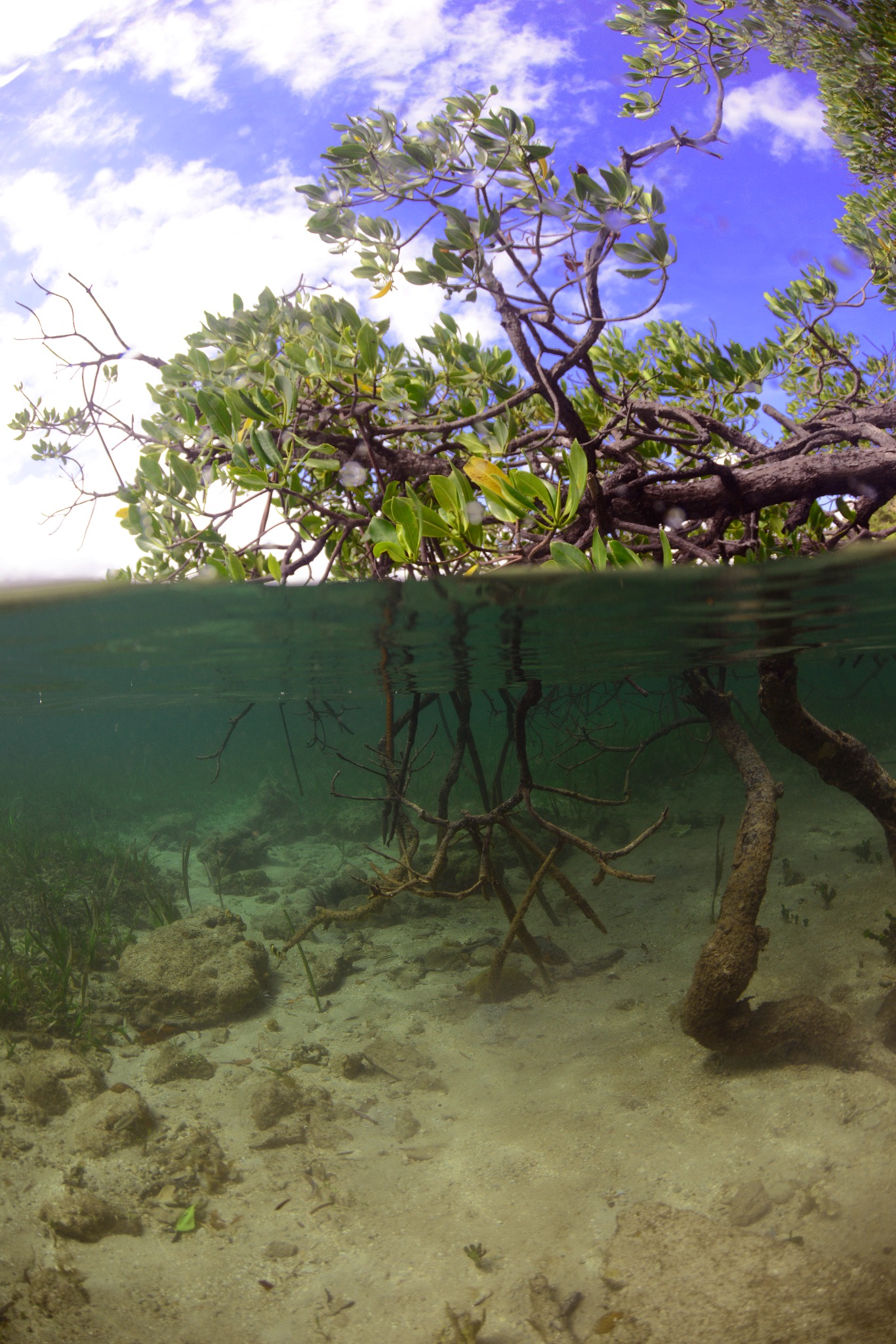
01. Follow branches and leaves above the waterline, then trace the roots below.
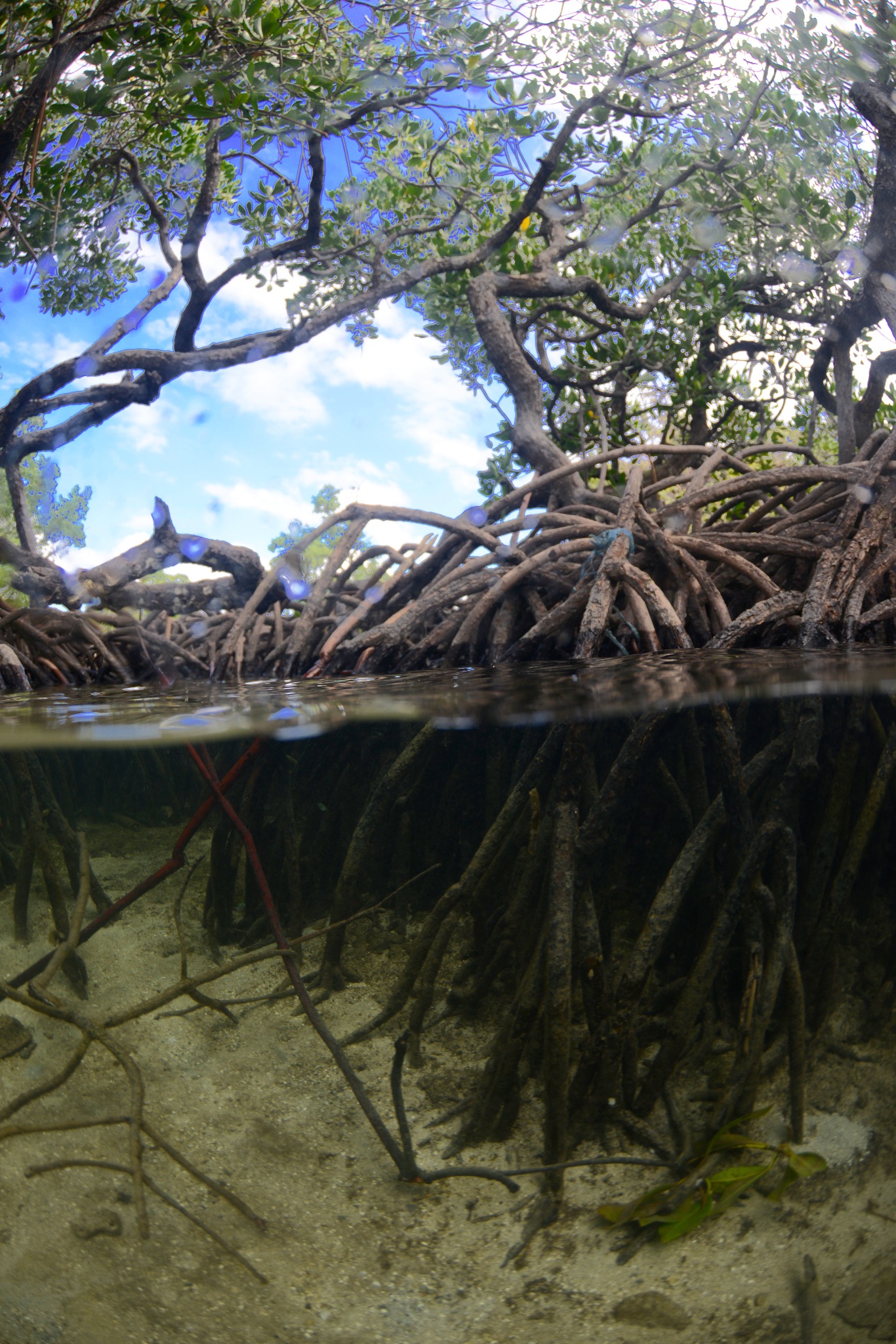
02. Compare the root patterns above and below the surface.
These two views show mangrove branches and leaves above the water, with roots continuing below the surface. Discuss: Which parts can you see above the waterline? Which continue below it? Ages 6–8: Point to a leaf, a branch and a root. Draw a line to show the water’s surface. Ages 9–12: Compare the two root patterns. Give two observations and one question that the photographs cannot answer.
Look across the roots
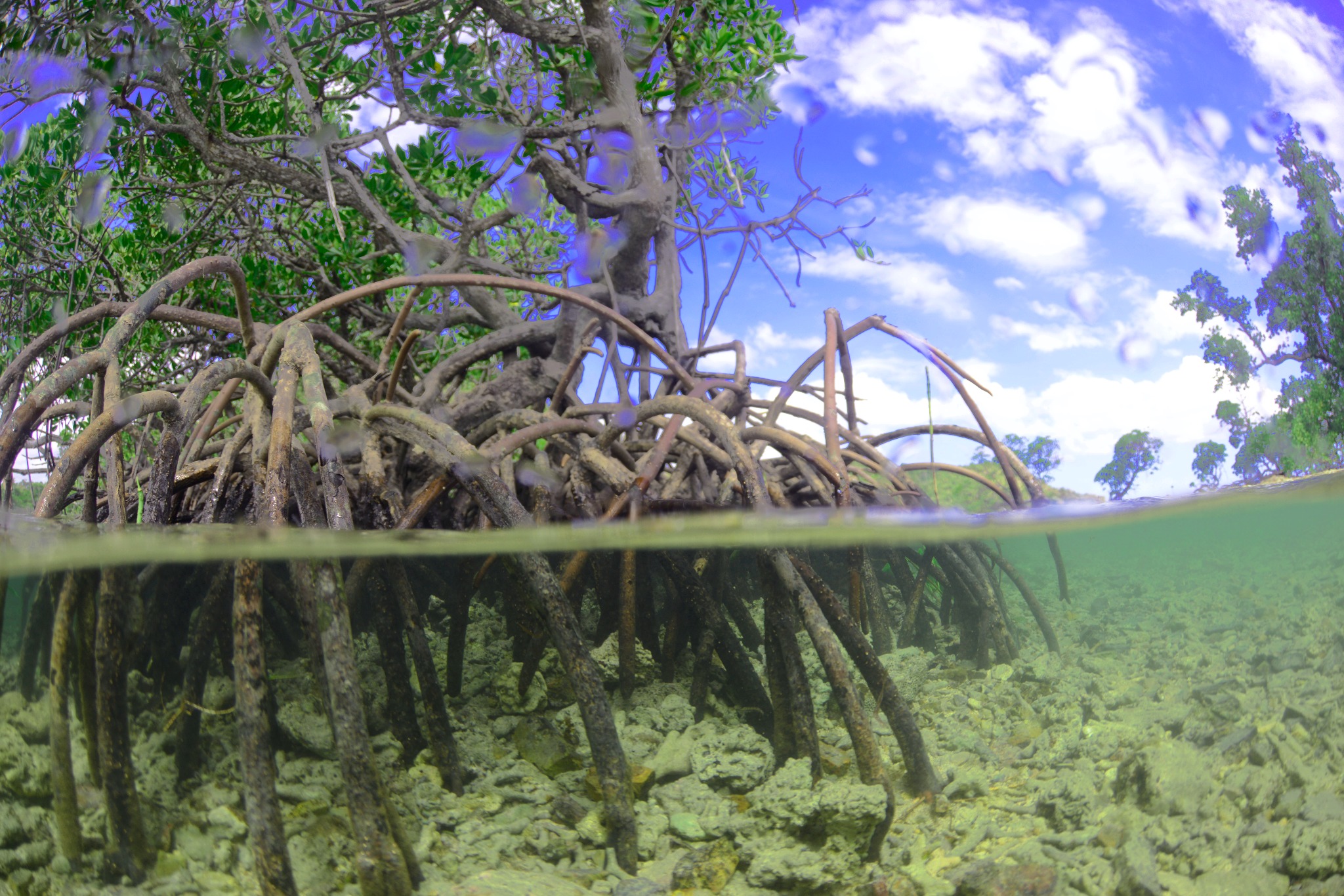
03. Look at roots crossing the waterline and the spaces between them.
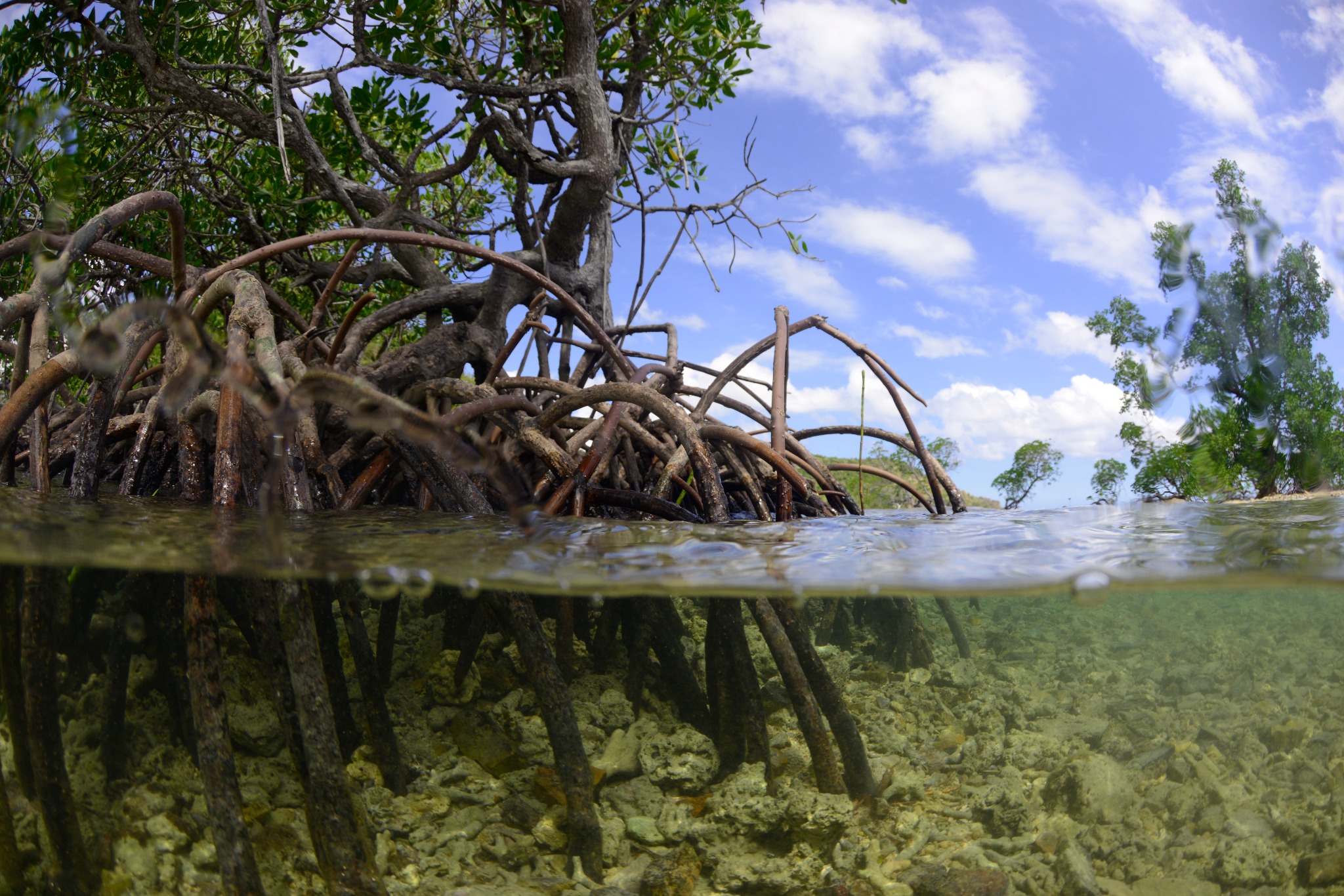
04. Trace the roots towards the bottom.
Two wider views show roots crossing the waterline and reaching the bottom. Look at the spaces between the roots. Discuss: How might an animal use the spaces between roots? Mark this as an idea to investigate. Ages 6–8: Trace the shape of a root. Find a place where a small animal might fit. Ages 9–12: What extra evidence would show which animals use this habitat? Can a single image tell you how the tide changes?
Pupil worksheet
Write, draw, speak or point to share your answers.
1. Draw part of a mangrove from a photograph. Label a leaf, a root and the waterline. Show something above and below the water.
2. Write two things you can see and one question you would like to investigate. Keep your observations separate from your ideas.
3. Plan one way a class could help care for a coastal habitat. Who would you ask for local advice, and how would you check whether the action helped?
Teacher notes
Learning goal: Describe a mangrove habitat from photographic evidence and explain why caring for it matters.
Time: 30–40 minutes. You need: the photo pages, worksheet and pencils. Project the photographs or share printed copies; print only page 3 of the PDF for each pupil.
Teach: Observe quietly, share in pairs, then discuss. Younger pupils can point, draw or dictate; older pupils should explain their evidence.
Reading the photographs: Roots, leaves, branches, the waterline and the bottom are observable. A possible hiding place is an inference, not proof that a particular animal lives there. The images do not establish a species, location, salt content or a change in tide.
Background: Mangroves are plants adapted to coastal tidal conditions. Their roots help anchor them; some root structures also help them obtain oxygen in waterlogged ground. Mangrove habitats provide shelter for many young fish and other animals and can reduce coastal erosion. Root shapes and functions vary between species.[1]
Timor-Leste connection: In a 2019 account, UNDP described communities in Ulmera, Timor-Leste, restoring and monitoring mangroves with government and project support. Use this as a community-care example, rather than as a description of the location in these photographs.[2]
Worksheet guidance: Accept clear labels and specific visible details. A useful care plan might prevent litter escaping from school, with a count before and after. Consult local custodians and habitat managers about local action; do not treat planting or entering a mangrove area as a classroom instruction.
Check learning: Ask for one observation, one explanation and one unanswered question.
Useful words: habitat: the place an organism lives; tide: the regular rise and fall of sea level; observation: something noticed or measured.
Sources and photograph record
Photographs © Troy Mayne. The four photographs are presented in their supplied sequence and full framing.