
One cuttlefish, changing appearance
A complete photo investigation for ages 6–12. Read the photographs, pupil worksheet and teacher notes on this page, or download the printable pack. Allow 30–40 minutes. No Reef Gang book is required.
Follow the nine photographs
Troy identifies these nine photographs as the same cuttlefish changing appearance. Follow his supplied sequence; do not guess how much time passed.
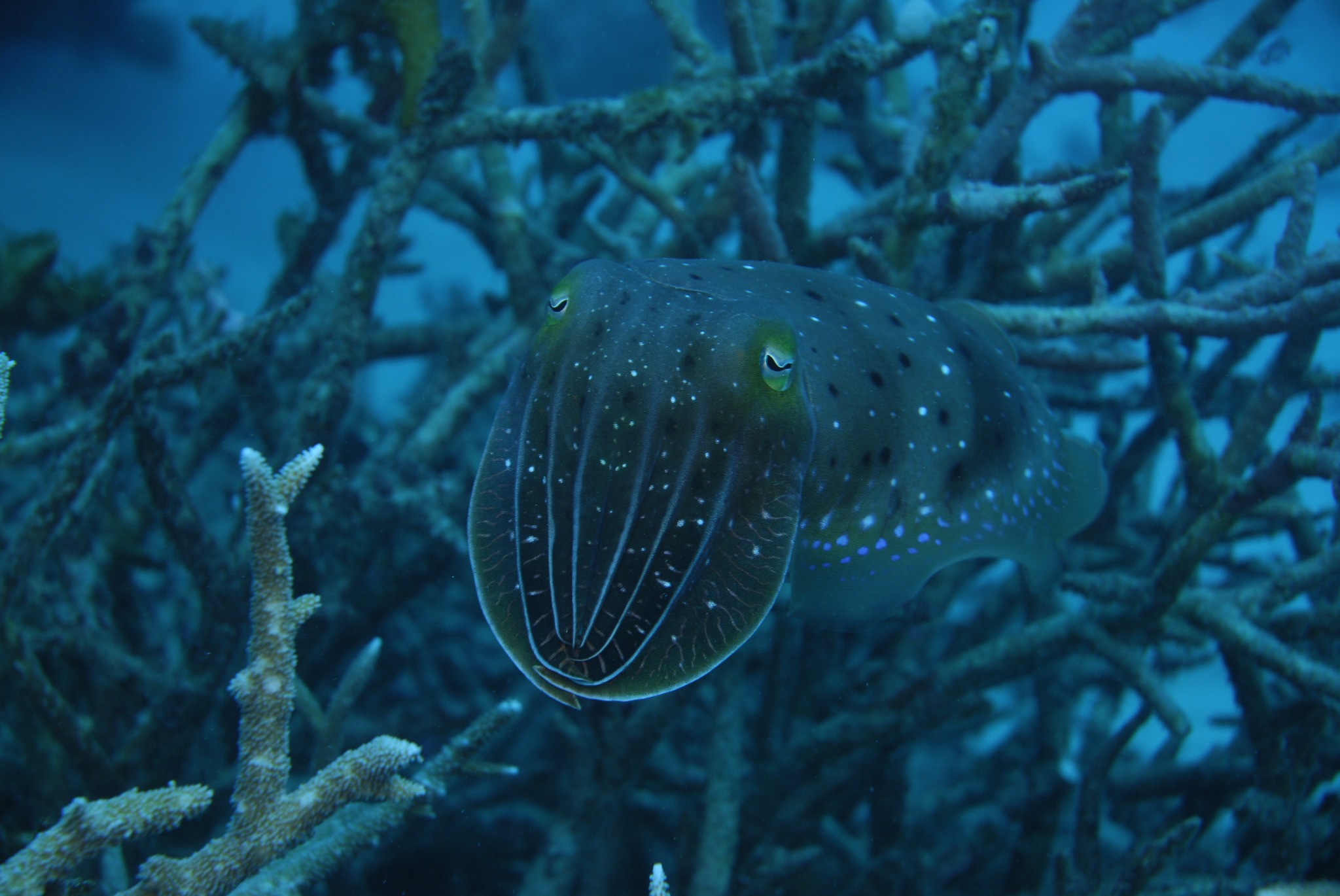
01. A darker body and fine pale markings stand out among the branching coral.
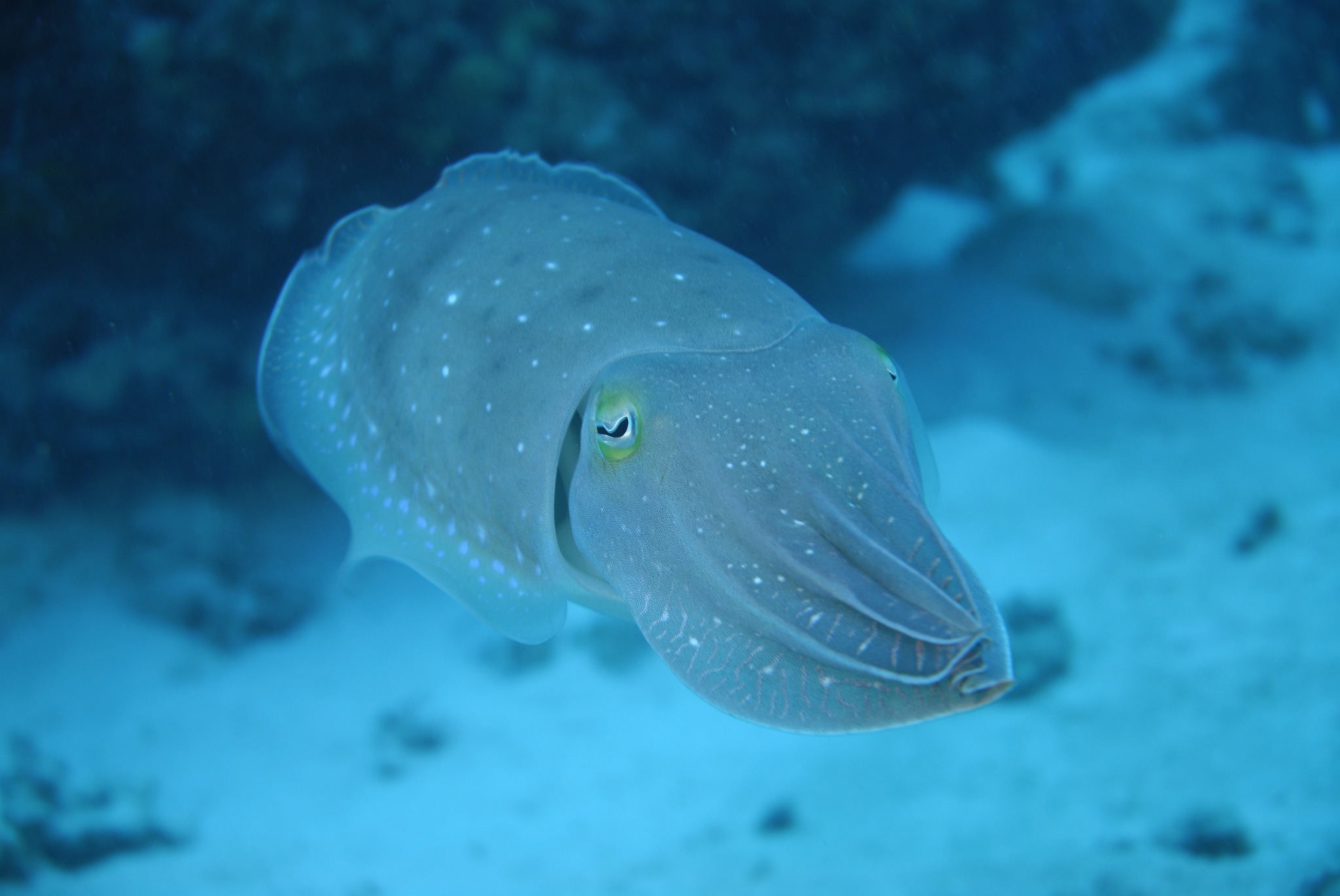
02. The body appears much paler in this view above the sand.
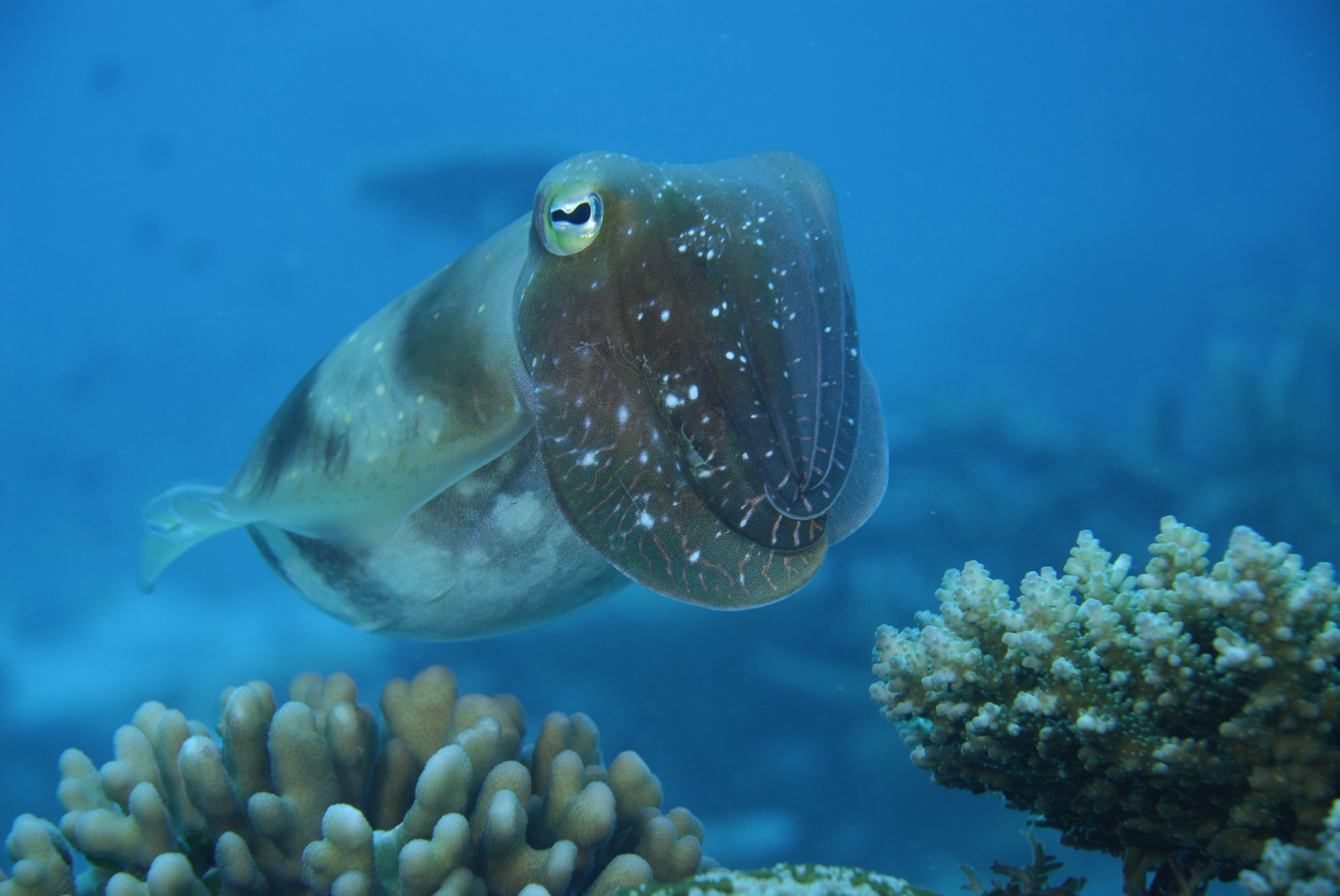
03. Pale and dark patches appear together as the cuttlefish faces towards the camera.
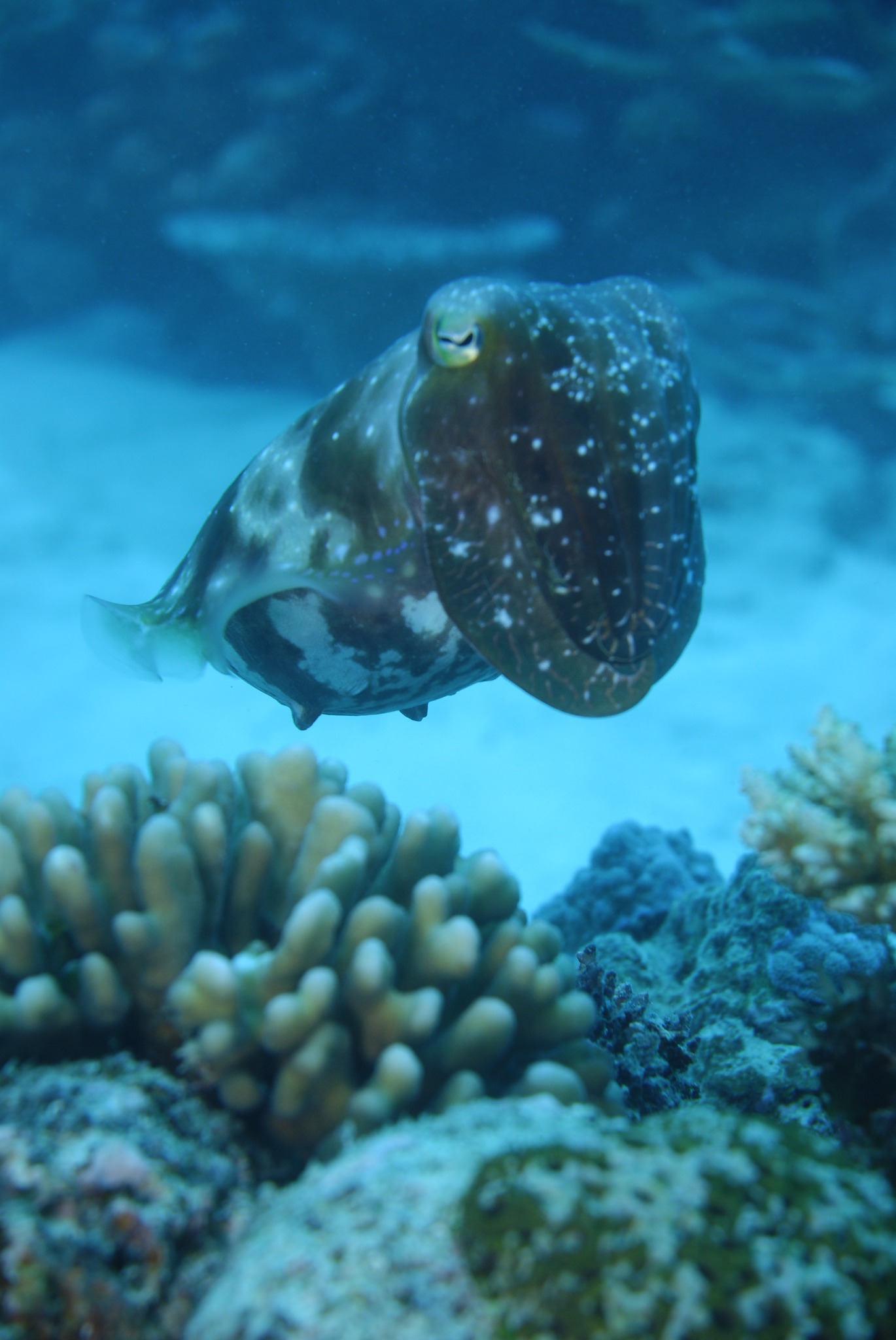
04. This portrait view shows the front of the animal and part of its side.
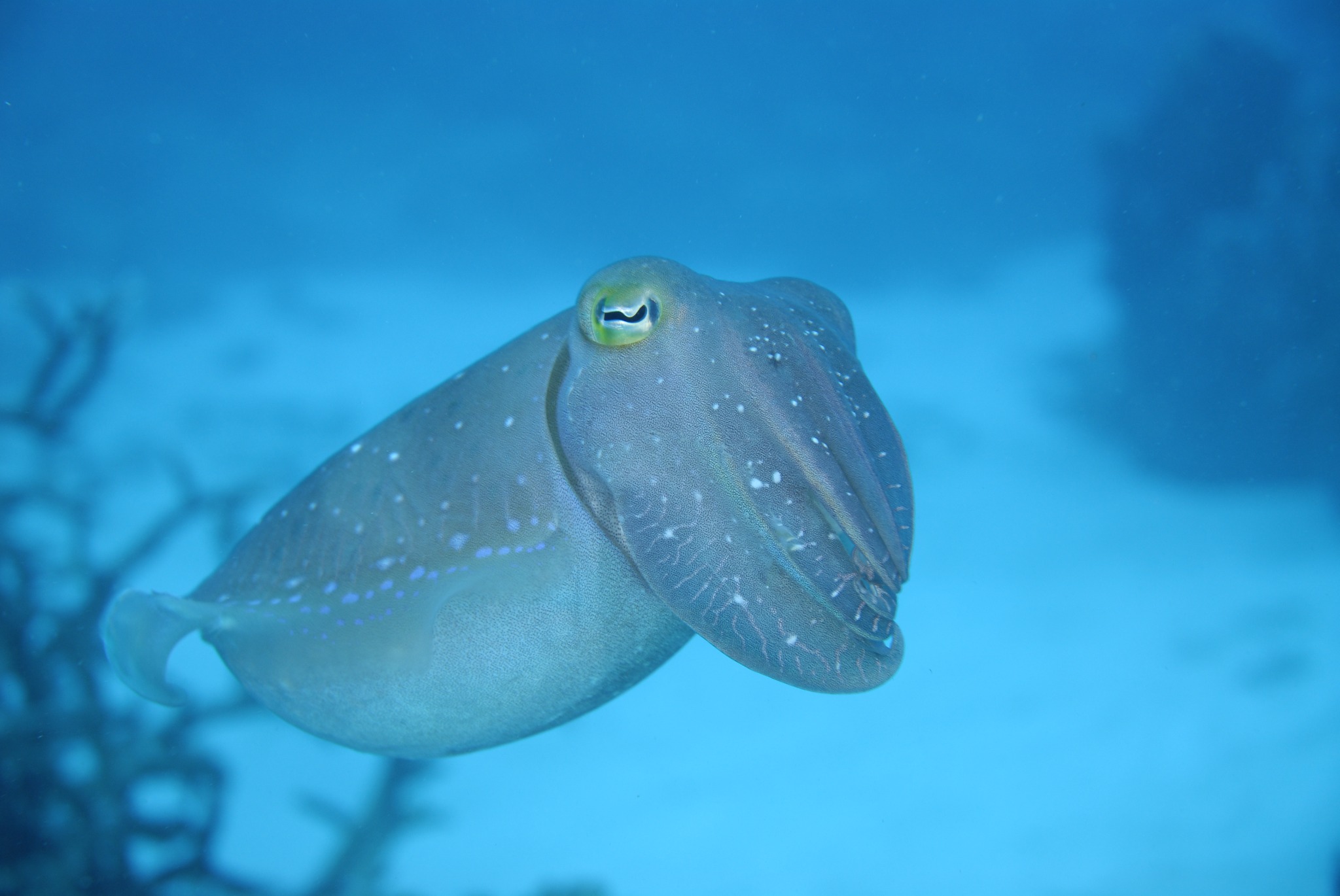
05. A side view makes the eye, body edge and smaller pale markings easier to compare.
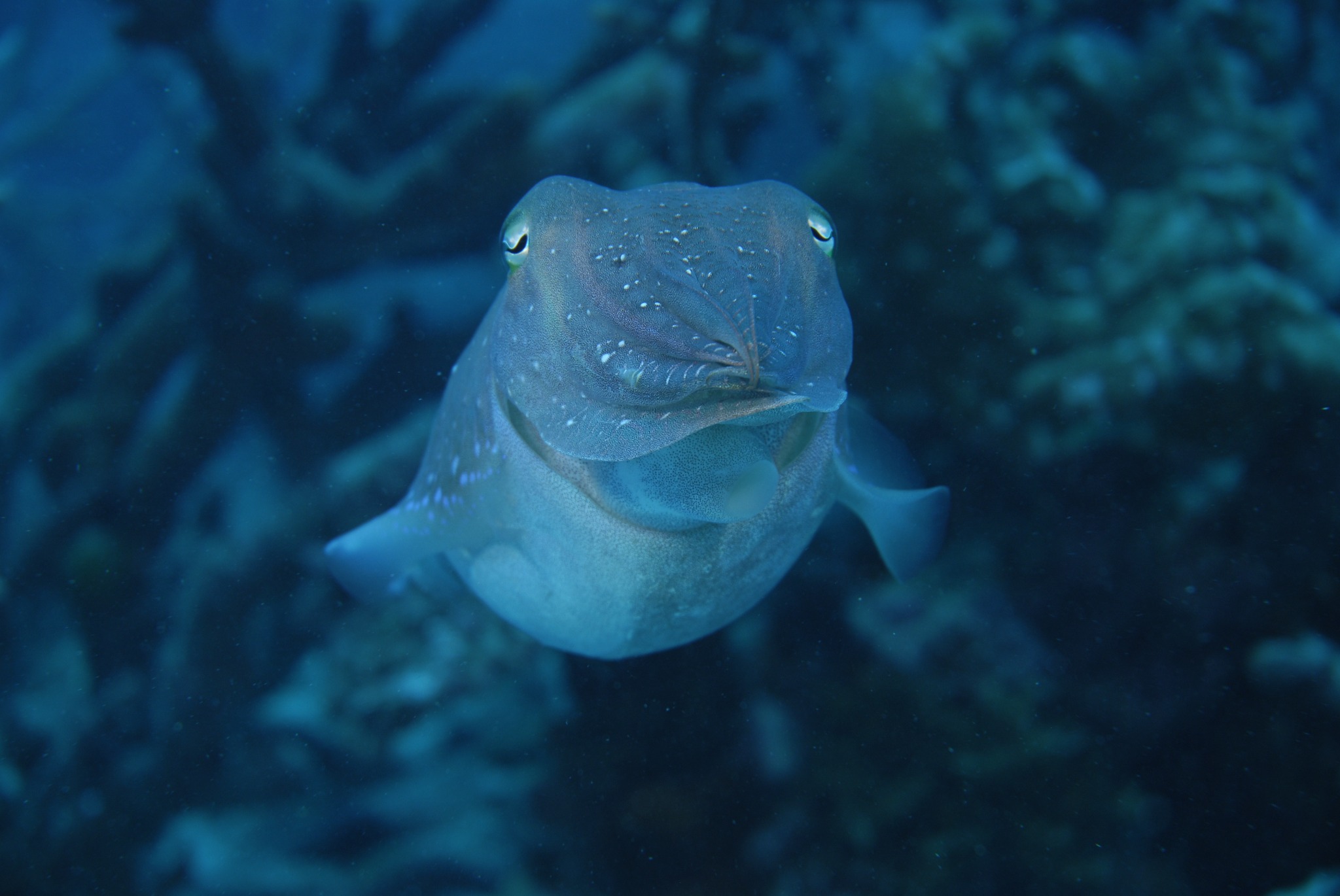
06. In this front view, the pale body contrasts with darker branches behind it.
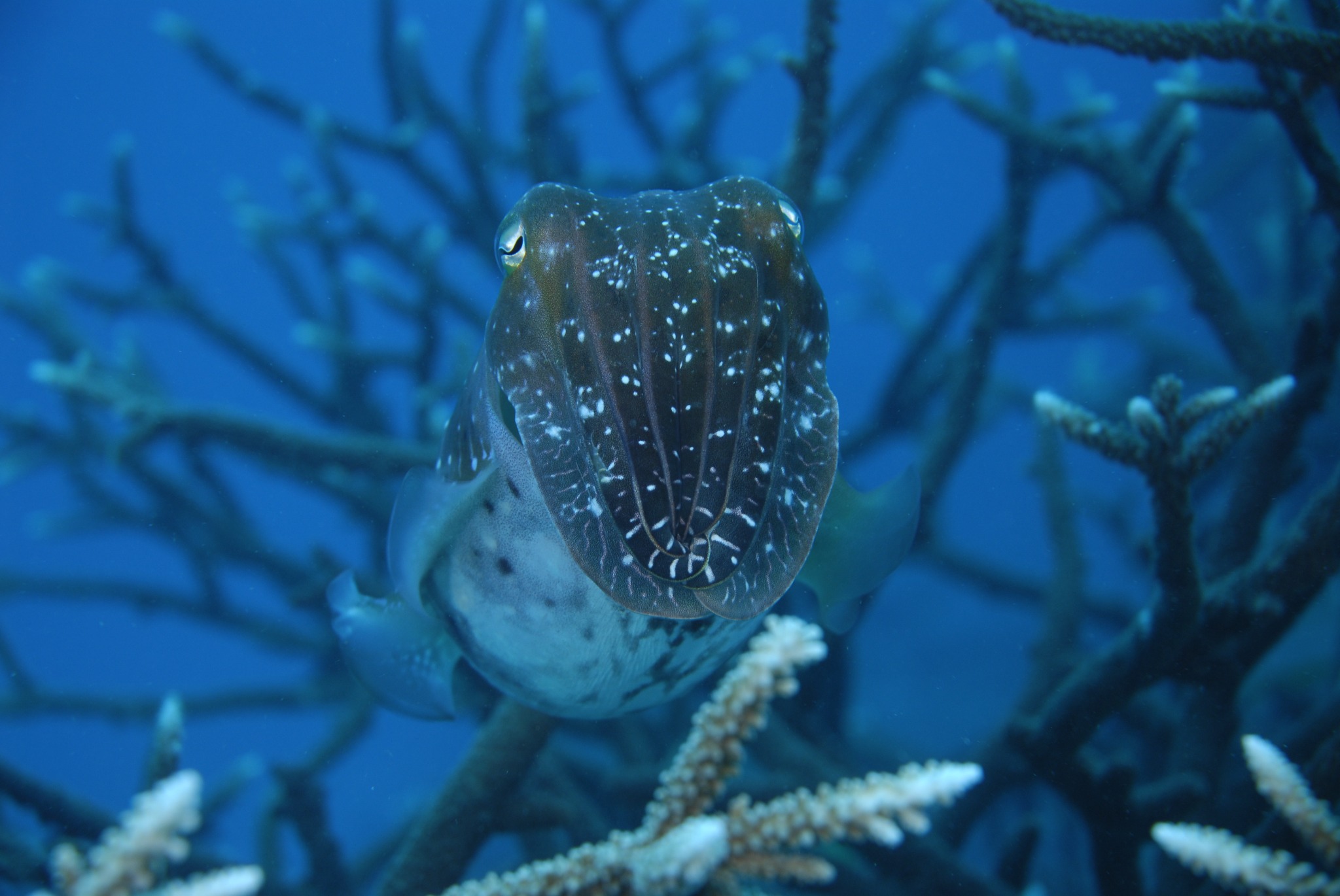
07. The front appears darker again, with many small pale markings.
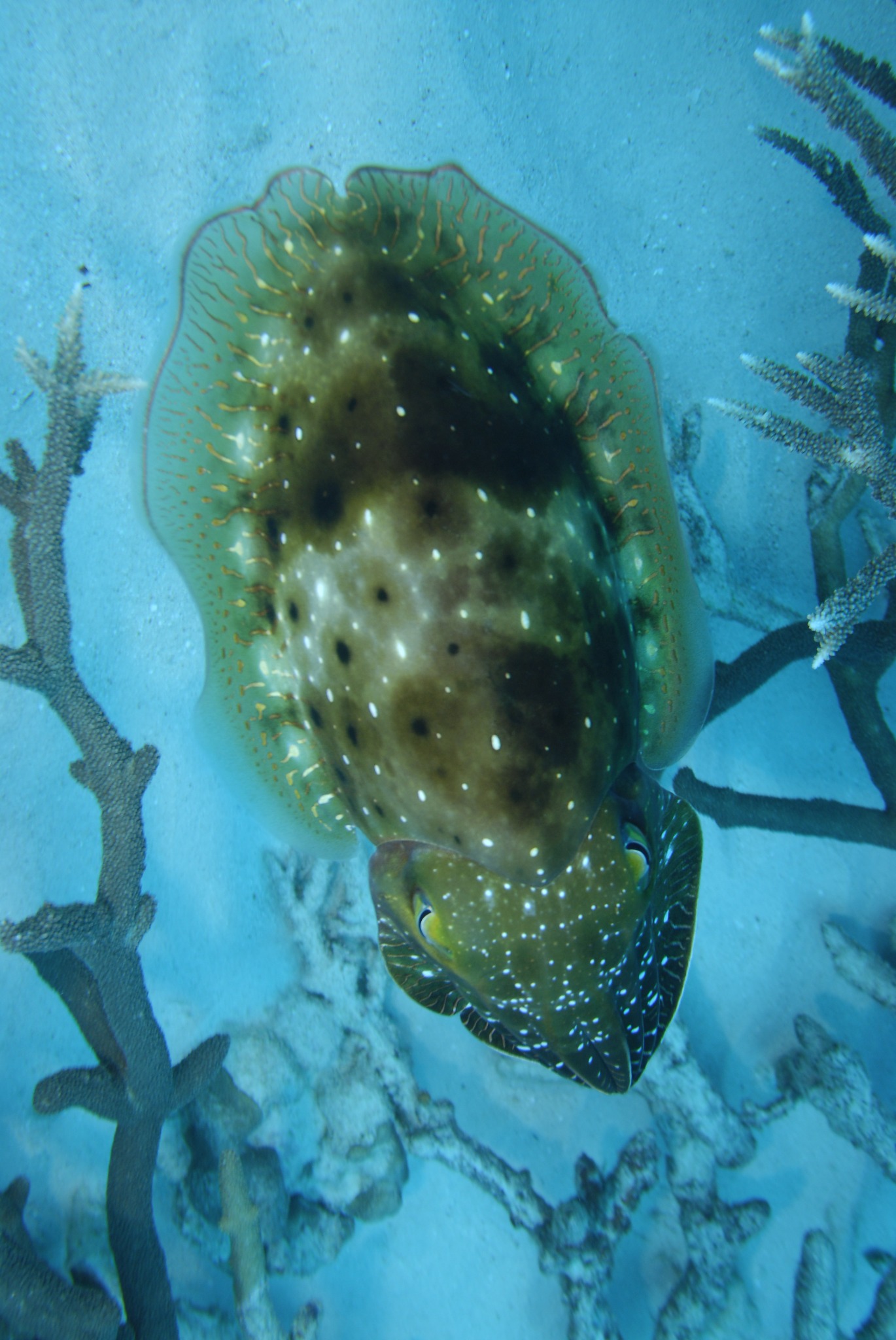
08. An overhead view reveals irregular dark patches across a paler body.
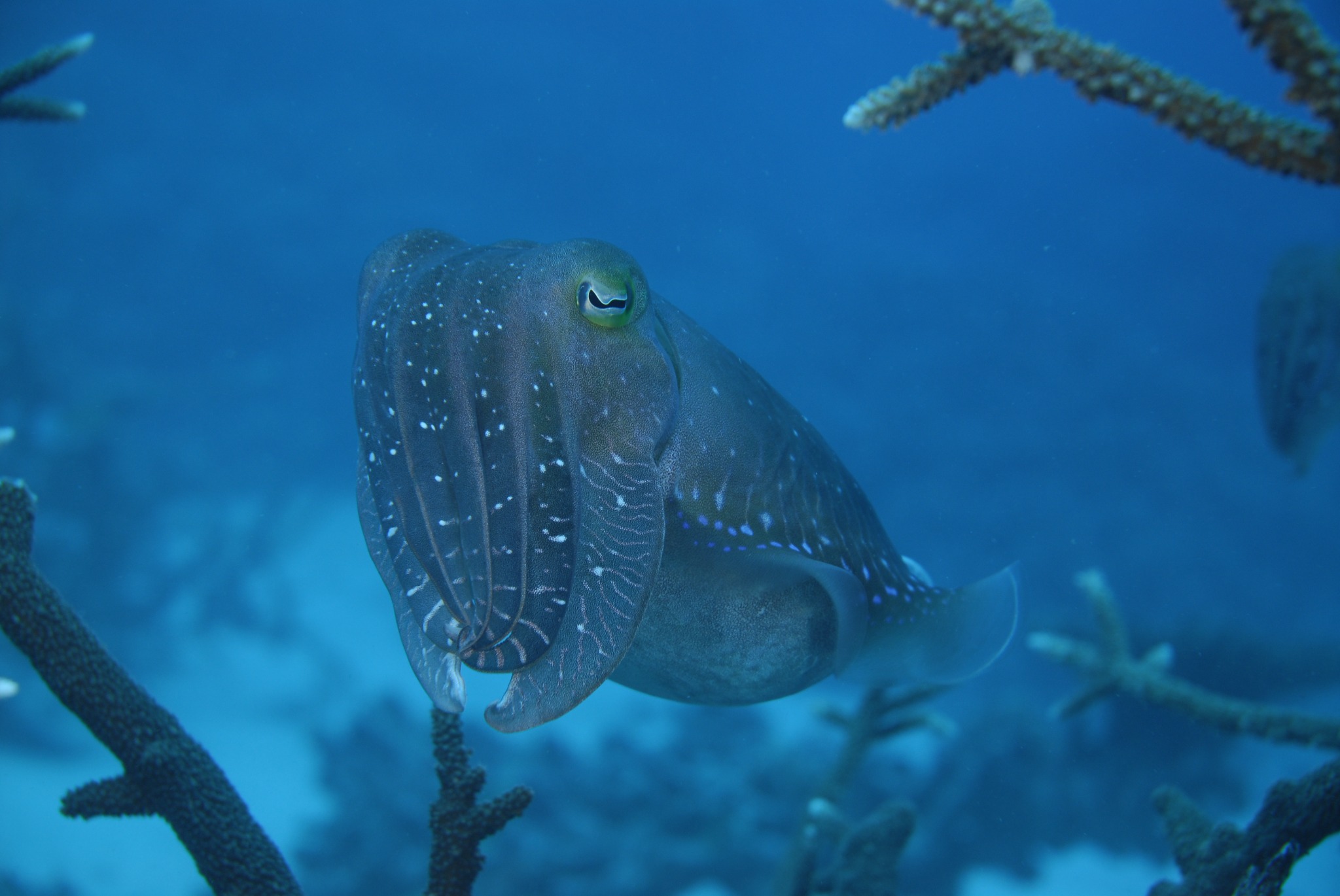
09. The final supplied view shows fine pale markings and a different viewing angle.
Look and compare
1. Photographs 01–02: Find the eye, the body edge and the pale markings. What looks different? What can you still recognise?
2. Photographs 03–04: Point to one area you can see in both photographs. Which differences might be affected by the viewing angle?
3. Photographs 05–06: Find the body behind the eyes and the arms at the front. Describe what you see before suggesting why it changed.
4. Photographs 07–08: Where are the largest dark areas? Separate a dark patch from an area that might be in shadow.
5. Look back through all nine photographs. Choose two with a similar viewing angle and record a visible difference. A reason for the difference needs more evidence than its appearance alone.
I notice … Name a visible feature and give the photograph numbers.
I think … because … Suggest an explanation, then state the evidence you would need.
I wonder … Ask one question that a video or field note could help answer.
Keep in mind: A still photograph does not tell us the animal’s feelings, the exact cause of a change or the time between views.
Pupil worksheet
What changed? What stayed recognisable? Use paper or a document to record your name and date. You can speak, point, draw or write your answers. This page does not collect or submit pupil information.
1. Choose two photographs. Write their numbers and sketch one feature you can compare: an eye, a body edge or an area of pale or dark markings.
2. Record three pieces of evidence, using the photograph numbers: a visible difference; a recognisable feature; and something you cannot tell.
3. Why should we consider camera angle and lighting when comparing these photographs?
4. What would a video, a time record or a field note help you find out?
My careful conclusion: “I can see __________. I cannot yet tell __________.”
Teacher notes
Learning goal
Compare visible features across a photo sequence and distinguish an observation, an explanation and an unanswered question.
Time and materials
Allow 30–40 minutes. Display the nine photographs on this page. Provide pencils and scrap paper, or print only page 6 of the PDF for each pupil. The activity does not require a Reef Gang book or contact with a live animal.
Suggested lesson
Look (5 minutes): Show 01 and 02 without supplying a cause. Collect visible observations.
Compare (10 minutes): Follow 01–09. Ask pairs to select two views with similar angles.
Record (10–15 minutes): Complete the worksheet using photograph numbers.
Explain and reflect (5–10 minutes): Introduce the science below, then revisit what the photographs alone can establish.
Science to share
Cuttlefish can vary skin patterns by controlling pigment-bearing structures called chromatophores. Small muscles change the visible area of pigment.[1] They can also alter raised skin structures called papillae; controlled research shows that visual contrast and changing illumination can influence this response.[2] These mechanisms offer possible explanations, not a diagnosis of what caused each change in Troy’s photographs.
Suggested answers and limits
Visible comparisons: 01 appears darker than 02; 03 and 04 show different viewpoints; 08 reveals dark areas from above. Accept other comparisons supported by the images.
Limits: There are no supplied time intervals, experimental controls or measurements of the animal’s internal state. Light, viewpoint and photographic exposure also affect appearance. Not every bright point should be labelled a skin structure.
Different ways to take part
Ages 6–8: Compare one pair. Point, talk or draw; use “I notice” and “I wonder”.
Ages 9–12: Compare several views, support statements with photograph numbers, and identify evidence needed to test an explanation. Use larger images or verbal descriptions when needed.
Check learning
Ask each pupil for one observation, one explanation labelled as a possibility, and one question still to investigate. A strong answer separates these rather than choosing a confident-sounding cause.
Photograph record
Photographs © Troy Mayne. Troy observed the same cuttlefish changing appearance across this sequence. The photographs are presented in their original supplied order and full framing.
Image order: 01 _TLM2537.JPG; 02 _TLM2540.JPG; 03 _TLM2546.JPG; 04 _TLM2547.JPG; 05 _TLM2550.JPG; 06 _TLM2552.JPG; 07 _TLM2555.JPG; 08 _TLM2560.JPG; 09 _TLM2562.JPG.
Research references
Both open-access studies below examined the common cuttlefish, Sepia officinalis. They support the general teaching explanation; they do not identify the species, timing or motivation in Troy’s photographs.
[1] Theodosia Woo, Xitong Liang, Dominic A. Evans, Olivier Fernandez, Friedrich Kretschmer, Sam Reiter, and Gilles Laurent, “The Dynamics of Pattern Matching in Camouflaging Cuttlefish,” Nature 619 (2023): 122–128.
[2] Christian Drerup, Martin J. How, and James E. Herbert-Read, “Visual Contrast from Background Features and Dynamic Illumination Contributes to Three-Dimensional Camouflage in Cuttlefish,” Journal of Experimental Biology 228, no. 16 (2025): jeb249713.