
Hidden in plain sight
Free camouflage photo activity for ages 6–12. Look closely, compare evidence, and test a paper model.
Photo study 1: Eyes above the sand
Eyes above the sand
A fish’s eyes and face remain exposed while sand conceals much of its body.
Discuss: Which parts are hidden, and which clues give the fish away?
Ages 6–8: Find the eyes and mouth. Point to the sand hiding the body.
Ages 9–12: Which features make the animal difficult to detect? Use visible evidence.
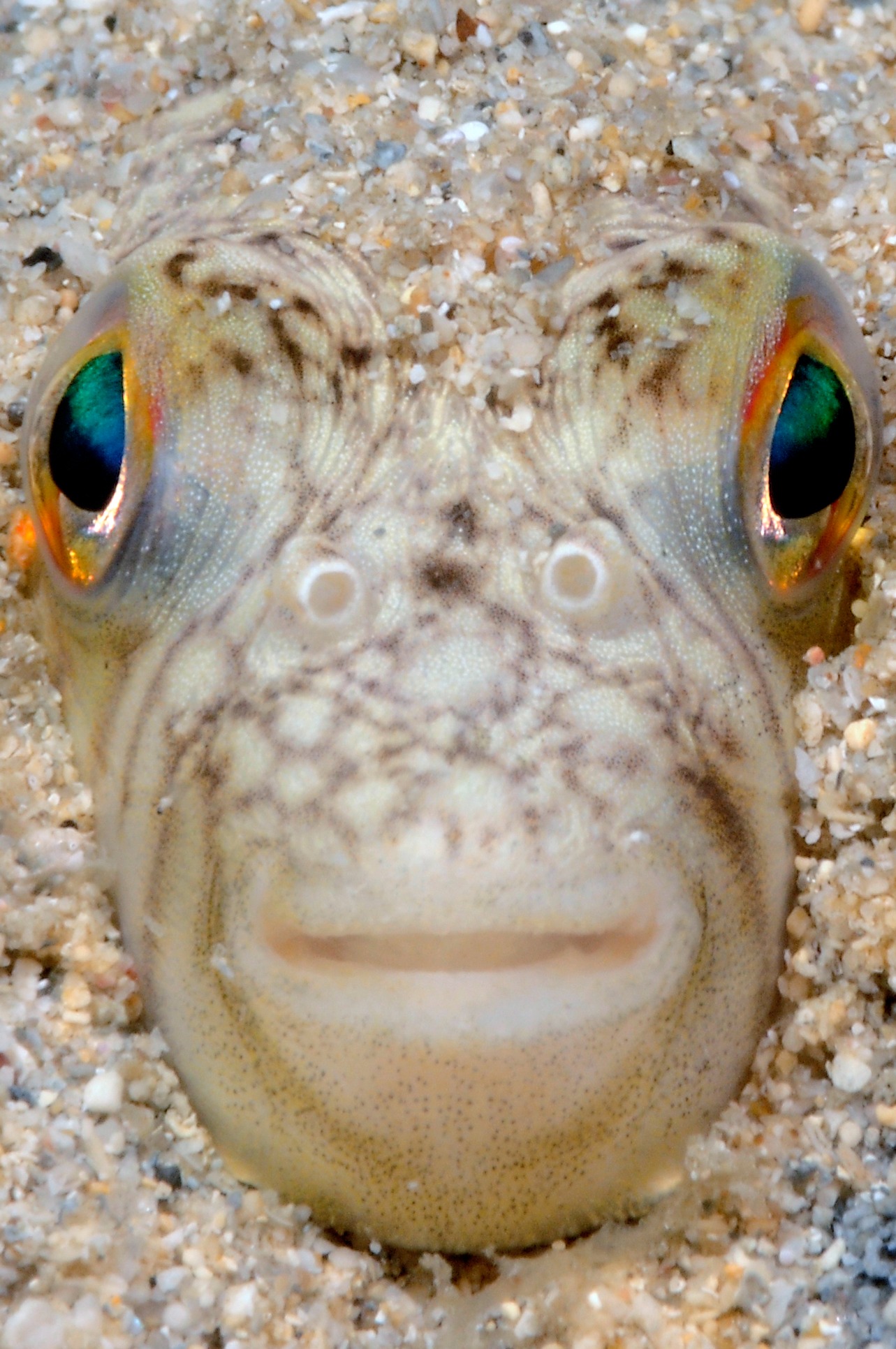
Photo study 2: A buried ambush hunter
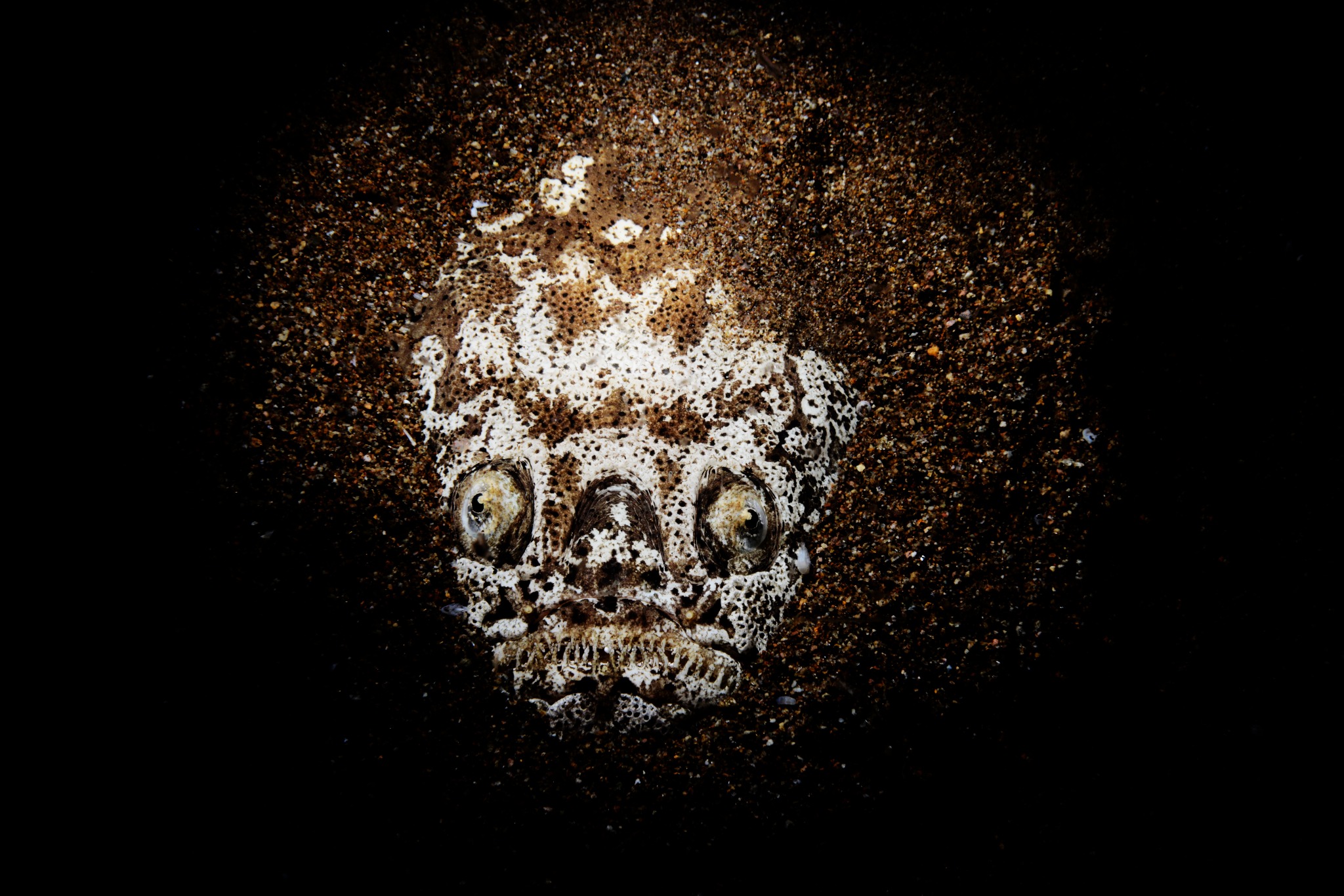
A buried ambush hunter
A stargazer’s eyes and mouth are visible above dark sand.
Discuss: How can remaining hidden help an animal catch food?
Ages 6–8: Spot two clues that an animal is there.
Ages 9–12: How might this position help an ambush predator? What does the image not show?
Pupil worksheet
1. Draw the outline of one hidden fish. Label two clues that helped you find it.
2. Explain how the background and body position help it remain hidden.
3. Plan a paper model: compare the same paper fish on two different backgrounds. What will you keep the same, and what will you record?
Teacher notes
Teach
Learning goal: Explain how colour, body position and background can make an animal harder to notice.
Time: 25–35 minutes. You need: the photo pages, the worksheet and pencils. Project the photographs or share printed copies; print only page 3 of the PDF for each pupil.
Observe quietly, compare ideas in pairs, then discuss as a class. Younger pupils can point, draw or dictate. Older pupils should explain their evidence and identify uncertainties.
Photo discussion
Photo study 1: Learners can locate the eyes, mouth and boundary between the head and sand. Concealment combines body position with a similar-looking background. The photograph does not show a strike. Camouflage can help animals avoid detection by predators or by prey.
Photo study 2: Stargazers are ambush predators: they conceal themselves in sediment and seize prey that approaches. Upward-facing eyes and mouth allow attention towards the water above. This image illustrates the position, while a sequence would be needed to show a particular capture. The exact species is unconfirmed.
Worksheet guidance
Eyes, mouth edges and the boundary between sand and animal can reveal a concealed fish. Concealment may help an animal avoid predators or approach prey.
For the paper model, keep fish size, viewing distance, lighting and search time consistent. Change only the background. Compare detection time or the number of observers finding the fish. This is a model, not a measurement of wild hunting success.
Check learning
Ask each pupil for one observation, one explanation and one question still to investigate.
Useful words: camouflage: features or behaviour that make an animal difficult to detect; predator: an animal that eats other animals; prey: an animal eaten by a predator.
Sources and photograph record
Adapted from Troy Mayne’s WRG teacher manuscript, photo studies A01, A03. The original photographs are reproduced in full. Source links checked 1 November 2026.
Museums Victoria — Marine Life exhibition notes (sand plains)
Credit: Photographs © Troy Mayne. Original photographs shown in full and in their supplied order.